
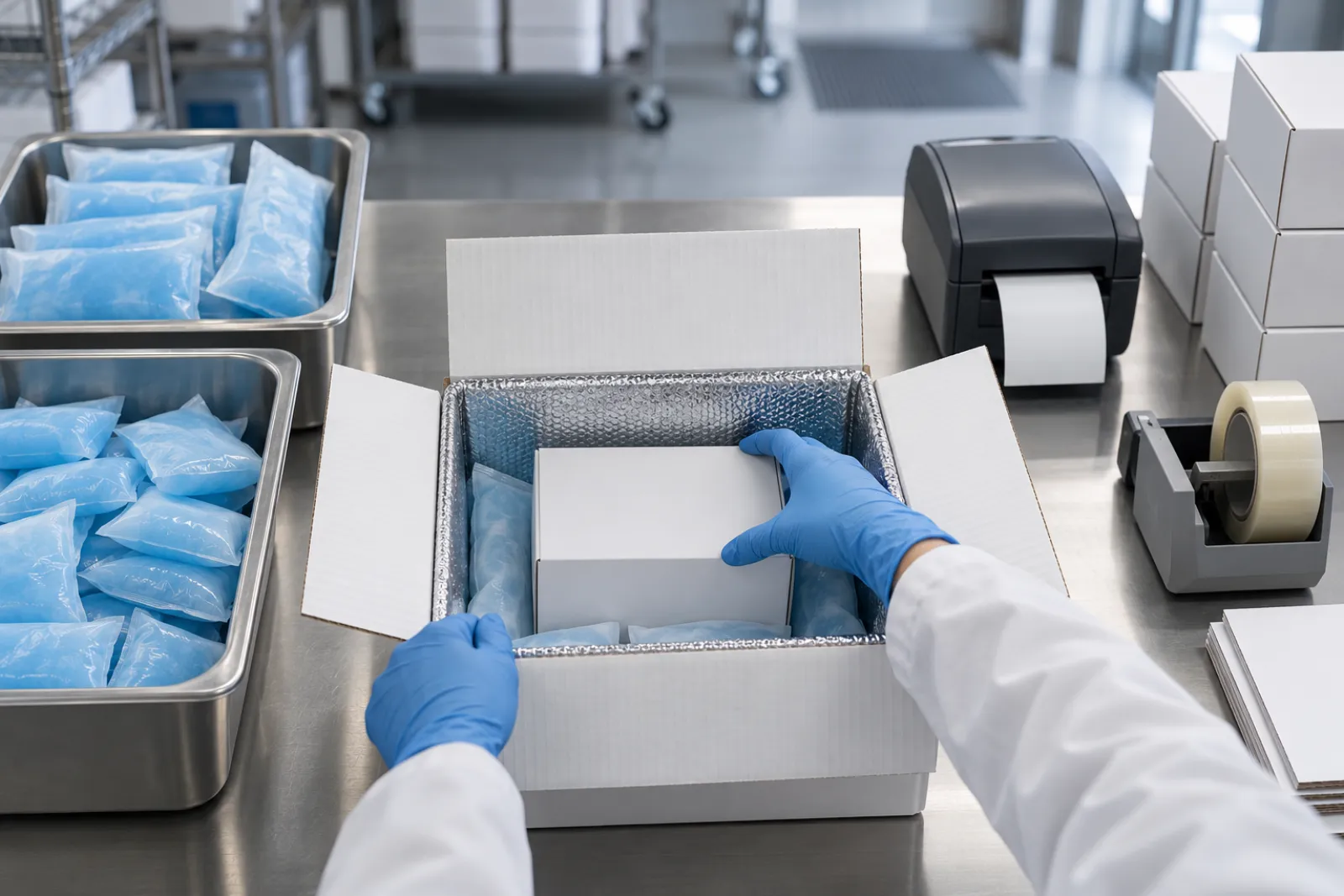
Designing a Cold Chain Packout Station: Process and Equipment Checklist
A practical checklist for designing a cold chain packout station: workstation layout, refrigerant staging, records, interfaces and what to confirm before buying.
Read guidePackout is the point where product, refrigerant, monitoring and packaging come together in a defined order. This section covers the stations and machines that support that work and, above all, the interfaces between them: what enters a station, what leaves it, and who owns the handover.
Only equipment with a real connection to cold chain packaging is included. The guides do not attempt to catalog general industrial machinery. Where a process such as gel pack filling and sealing is covered, the text explains how it connects to the shipper and the rest of the packout sequence.

A practical checklist for designing a cold chain packout station: workstation layout, refrigerant staging, records, interfaces and what to confirm before buying.
Read guideThe four automation guides follow the physical flow of a packout. Start with designing a cold chain packout station, since it describes the sequence everything else plugs into: staging, assembly, records and utilities. Then read specifying a gel-pack filling and sealing process if refrigerant is filled on your site. It covers refrigerant, film, fill quantity, sealing and cleaning. After that, labeling refrigerated packages deals with label materials, surface conditions and line integration. Last, cartoning, case packing and case sealing explains how the closing steps differ and where the insulated shipper sits in the line.
A plant that only buys one machine can still read all four. Each guide spends most of its length on interfaces, and an interface problem rarely stays inside one station.
Every guide in this section asks about your inputs before it asks about equipment.
A rough drawing of the current process is more useful than a long requirement document with no sequence in it.
Automation inherits decisions from packaging. Gel-pack filling only makes sense once you have chosen a refrigerant, so comparing gel packs and other PCM refrigerants is the place to start. Station layout also depends on the application: the pharmaceutical packout guide shows what a buyer should define about owners and records before choosing equipment. When the design is clear enough to ask for quotes, move on to the equipment RFQ checklist, and plan acceptance evidence with the FAT and SAT guide.
The guides give checklists and supplier questions at the level of process types. They name no brands or models and report no machine performance, because this publication has not tested any equipment. Use them to write a requirement a supplier can answer in specific terms and to spot which parts of your process are still undefined.
A practical checklist for designing a cold chain packout station: workstation layout, refrigerant staging, records, interfaces and what to confirm before buying.
Read guide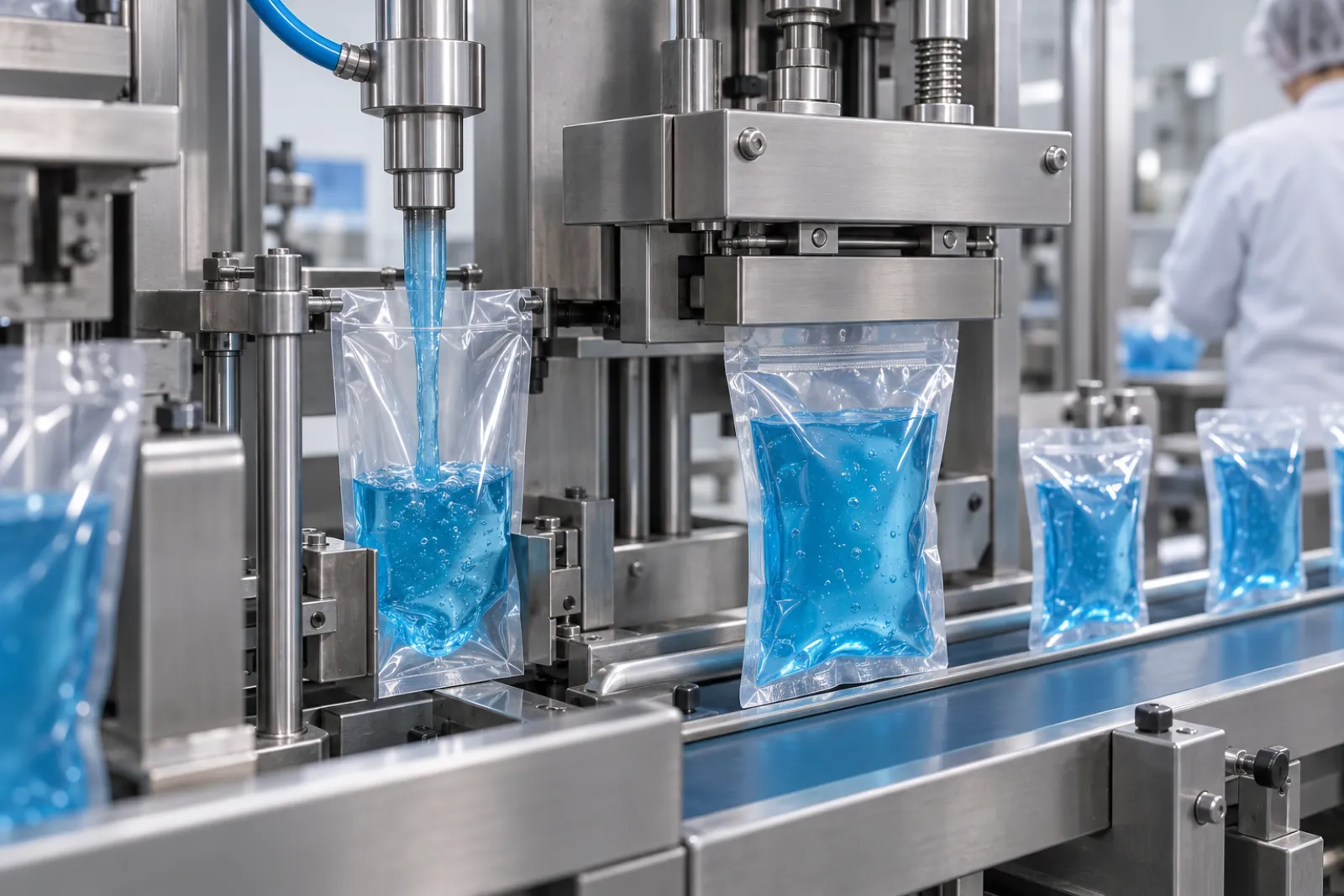
How to define refrigerant, film, fill quantity, sealing and cleaning requirements before you ask suppliers about gel-pack filling and sealing equipment.
Read guide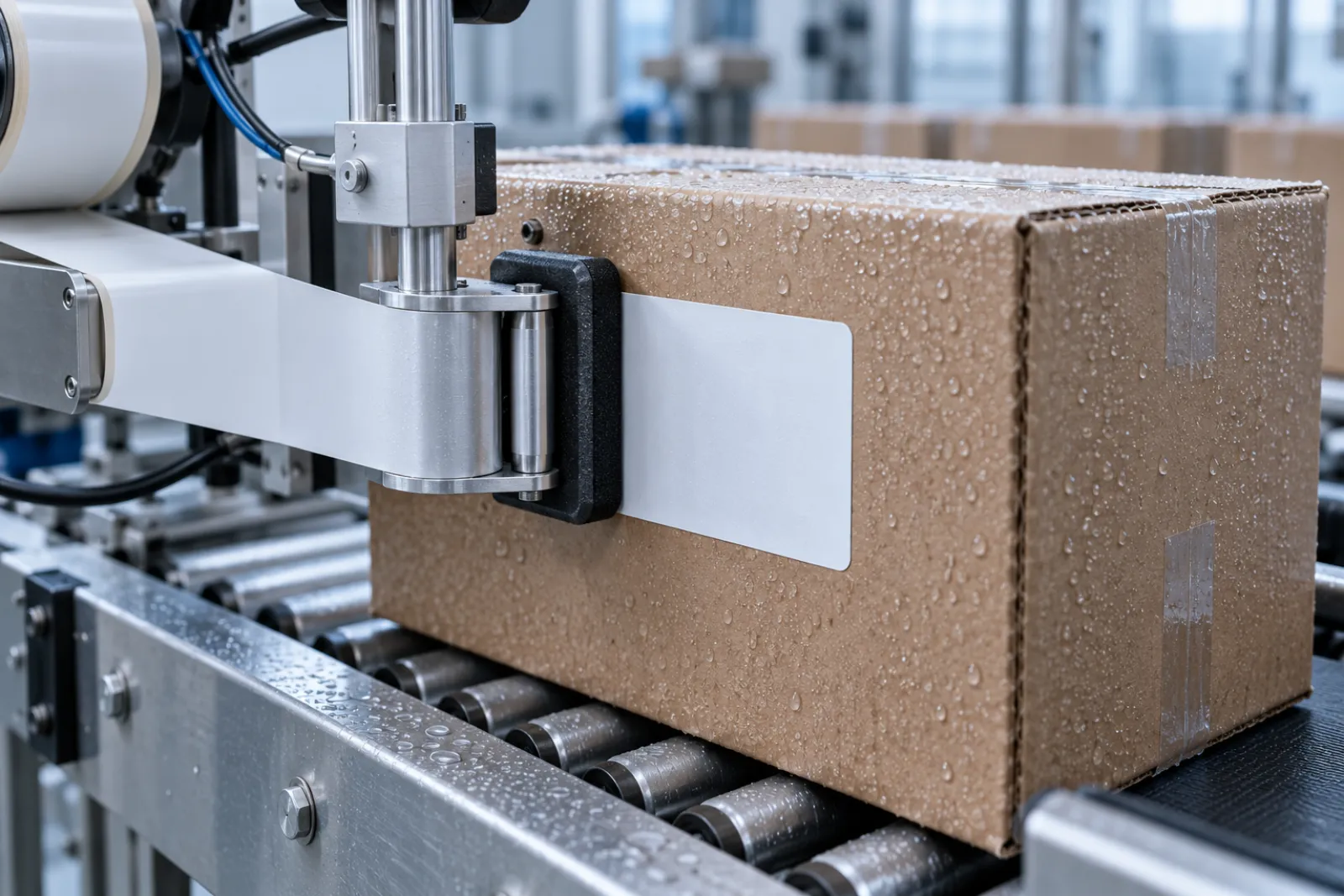
How to separate label-material fit from labeling-equipment fit for refrigerated packages, with surface conditions, line integration and a checklist for suppliers.
Read guide
How retail cartoning, shipping case packing, case sealing and insulated packaging steps differ in a cold chain line, and what to check at each interface.
Read guide