
Cartoning, Case Packing and Case Sealing in a Cold Chain Packout Line
How retail cartoning, shipping case packing, case sealing and insulated packaging steps differ in a cold chain line, and what to check at each interface.

Four steps that are often confused
Packaging line vendors and buyers use words like cartoning, case packing and case sealing loosely. In a cold chain line the differences matter, because each step has different tolerances and a different relationship to the thermal protection of the product.
- Retail cartoning puts the product into its sales or primary carton. It is part of the product presentation and usually happens before the shipping stage.
- Case packing places cartons or product into a shipping container. In a cold chain line, that container may be a standard corrugated case or an insulated shipper.
- Insulated packaging steps place the refrigerant, liner or insulation, and sometimes the logger, in the defined configuration around the product.
- Case sealing closes the outer case, usually with tape, glue or straps, so it survives handling.
The usual mistake is treating an insulated shipper as if it were a standard case. Insulation components, refrigerant and loose liners change the case’s stiffness, flap behavior, weight distribution and dimensions. They also add steps that equipment designed for plain corrugate was not built for. For other automation topics, see the Automation section hub.
Where thermal packaging sits in the line
A typical order is product cartoning, insulated shipper packing, case sealing, labeling and palletizing, as the diagram shows. The two middle steps carry the thermal function.
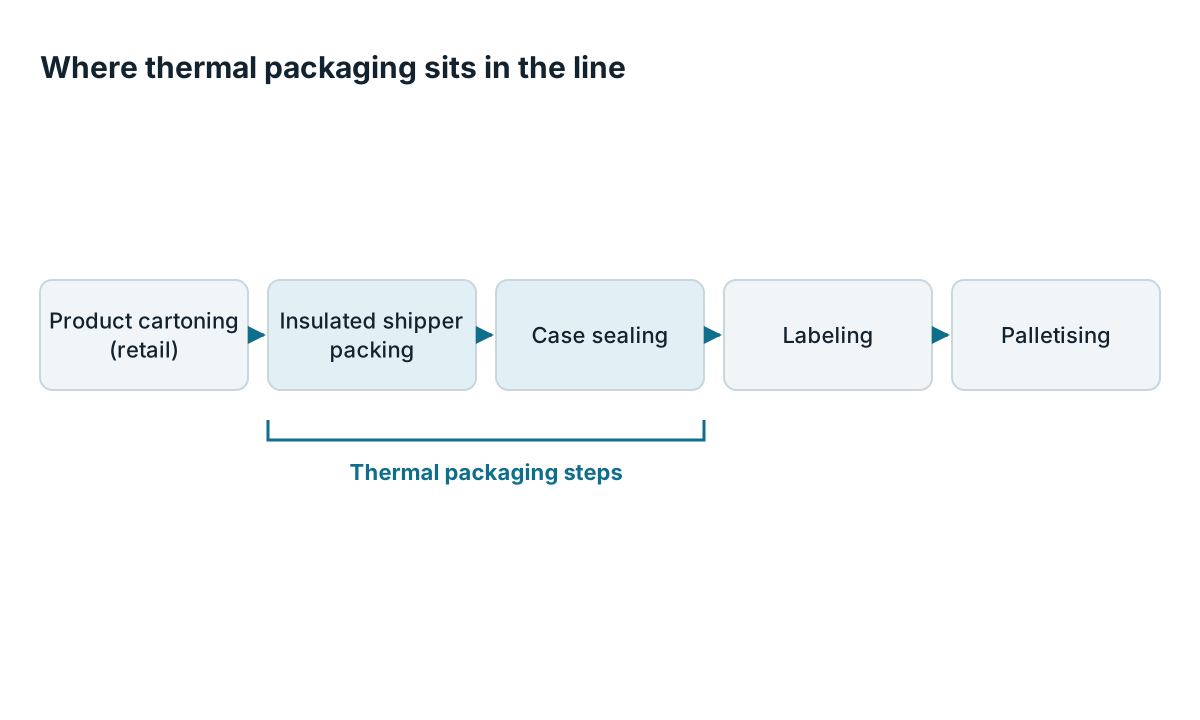
Not every operation follows this order. Some run insulated packing as a manual station and automate only sealing and palletizing. Others automate cartoning and leave everything after it manual. Choose which steps to automate based on volume, configuration variety and handling risk, not because a machine exists for the step. The packout station guide covers the station where insulated packing and logger steps are normally carried out.
Define the inputs first
Write these down before you speak to equipment suppliers.
- Product and primary pack. Dimensions, weight, fragility, orientation requirements and whether the product must remain upright.
- Shipper range. Each shipper type and size, including internal fit and external dimensions, and how much units vary from one to the next. Insulated shippers made of foam or molded materials can vary more than plain board.
- Pack configuration. Refrigerant count and position, liners, void fill and logger placement, as defined by your validated configuration.
- Time limits. Conditioned refrigerant has a window before the pack must be closed. Equipment speed, buffers and stoppages must all fit inside it.
- Closure method. Tape, hot melt, strap or a mechanical closure, and what the shipper design allows. Some insulated shippers have lids and inner flaps that standard sealers cannot handle.
- Volume and mix. Peak rate, number of configurations, changeover frequency.
- Environment. Ambient temperature and humidity, whether the line sits in a cold room or controlled area, and the effect on tape adhesion and operator comfort.
Comparing step options
| Step | Manual | Semi-automatic | Automatic | Cold chain watch points |
|---|---|---|---|---|
| Cartoning | Bench folding and loading | Machine-assisted folding, manual loading | Automatic erect, load, close | Carton integrity with chilled product; condensation affecting board |
| Case packing | Operator places product and refrigerant | Guided packing with check scale | Robotic or mechanical pick and place | Shipper variation; refrigerant placement accuracy; time out of control |
| Case sealing | Hand taping | Operator-fed tape sealer | Inline sealer with case size detection | Flap behavior on insulated shippers; tape adhesion on cold or damp surfaces; seal check |
| Labeling | Manual apply | Print-and-apply at station | Inline print, apply and verify | See cold chain labeling |
| Palletizing | Manual stacking | Assisted lift | Robotic or layer palletizer | Stack stability of insulated cases; load patterns for the lane |
If the line runs mixed shipper sizes, ask whether the case sealer adjusts automatically or needs manual setup per size, and what the changeover looks like. If shippers are foam or have loose lids, ask whether the equipment can hold the lid in position during sealing. If the line runs a single stable shipper at high volume, fully automatic case handling is more likely to pay back, but the supplier’s evidence for your shipper should show that, not assumption.
Interfaces that cause problems
Cartoning to packing. Primary cartons must arrive in a defined orientation and count. A buffer between steps helps, but you should know and limit how long product and refrigerant sit in it.
Packing to sealing. This is the main thermal handoff. Check the order in which refrigerant and liners are placed, how the lid or flaps are closed and how the case is conveyed. Vibration or tilting can shift loose components inside the shipper. Ask how the line detects an incomplete pack before it is sealed, for example with weight or presence sensors.
Sealing to labeling. The closed case must present a consistent, clean surface at the labeler. Tape overlaps and flap seams affect label position, and cold or damp surfaces affect adhesion, which the labeling guide discusses in detail.
Labeling to palletizing. Case labels must still be readable after handling. Pallet and case identification should follow the scheme your partners use; the GS1 General Specifications describe identification keys and barcode rules. Check the current version.
Line controls. If several machines come from different suppliers, agree how they communicate stop, run and fault states. PackML describes standard machine states and is often used as a common language. Ask what each supplier supports and who integrates it.
Records. Decide which results, such as check weights, seal checks and reject counts, are recorded and where they go.
Safety, hygiene and maintenance
Case packers, tape sealers and palletizers have moving parts and pinch points. Ask each supplier for their risk assessment approach and safeguarding concept. ISO 12100 sets out the general method, and in the EU the Machinery Regulation (EU) 2023/1230 applies; your safety team should confirm what applies at your site.
If the line handles food products, ask about hygienic design and cleanability. EHEDG guidelines offer a reference for hygienic design principles. Decide with your food safety team how far they apply to secondary packaging areas.
For maintenance, ask for the list of wear parts, tape and glue consumables, the supplier’s expected replacement intervals, and spare availability. Include training in the scope.
Evidence to request
- Handling trials with your shipper in all its variants, not a standard case.
- A description of how the machine detects missing or misplaced components.
- Changeover procedure for each configuration, with an estimated time stated by the supplier and confirmed in acceptance.
- Safety documentation and risk assessment.
- Controls documentation and the list of interface signals.
- A defined acceptance test plan; see the FAT and SAT evidence guide for what to ask for and when.
When you compile the request, the equipment RFQ checklist helps you list commercial and technical requirements in one place.
Line review checklist
- Each step is classified as cartoning, case packing, insulated packaging, case sealing, labeling or palletizing.
- Shipper range and unit-to-unit variation are documented.
- Pack configuration and conditioning window are defined.
- Maximum time between refrigerant placement and closing is set.
- Closure method suits the insulated shipper design.
- Detection of incomplete or misplaced packs is specified.
- Changeover steps per configuration are listed.
- Tape or closure adhesion has been checked at real surface conditions.
- Interfaces between machines, including states and faults, are documented.
- Safety assessment and hygiene needs are confirmed.
- Acceptance tests use your shipper and pack configuration.
Scope note: This guide explains how line steps differ and where interfaces matter. It does not state speeds or capacities for any machine, recommend makes or models, or decide how your product must be packed. Those come from your pack configuration and from supplier evidence.
Limitations of this guide
This is general guidance without measured data. We have not tested equipment, and the table of options is a framework for questions, not a ranking. Standards and regulations are named for context only; check the current versions and the rules that apply to your site and market. Supplier claims about throughput, tolerance to shipper variation and suitability for insulated packaging should be confirmed in trials with your own materials.
Related guides
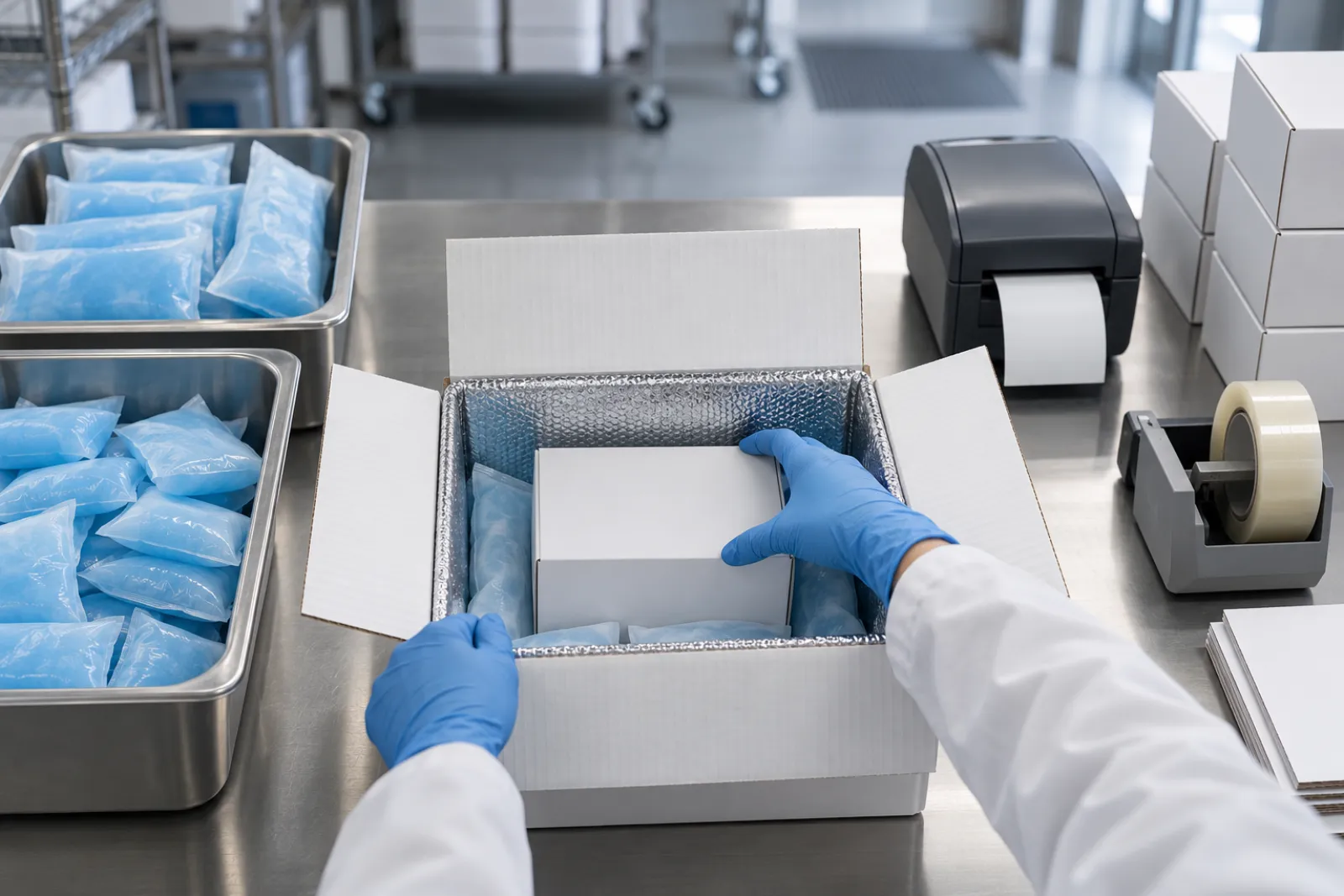
Designing a Cold Chain Packout Station: Process and Equipment Checklist
A practical checklist for designing a cold chain packout station: workstation layout, refrigerant staging, records, interfaces and what to confirm before buying.
Read guide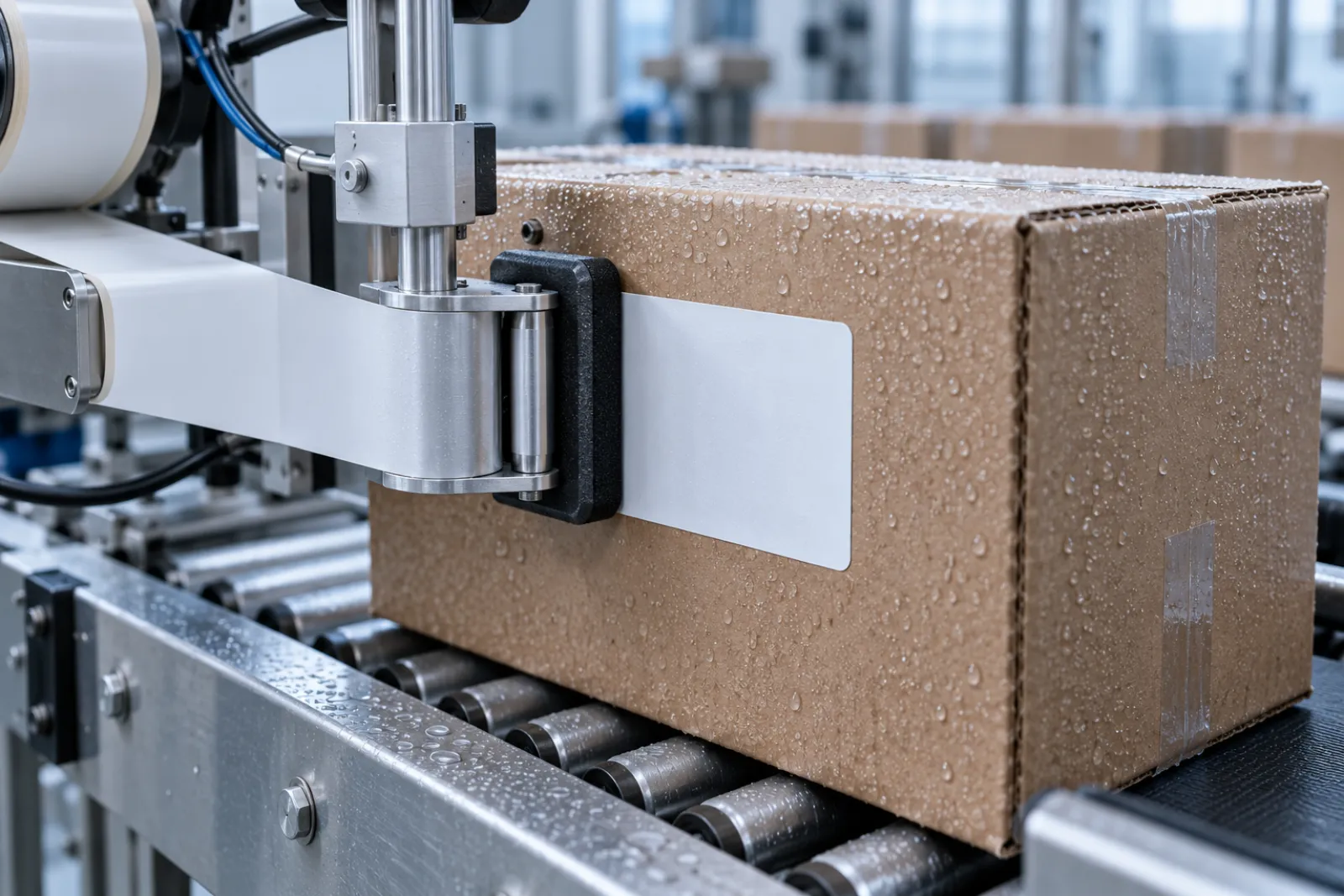
Labeling Refrigerated Packages: Materials, Surface Conditions and Line Integration
How to separate label-material fit from labeling-equipment fit for refrigerated packages, with surface conditions, line integration and a checklist for suppliers.
Read guide
Cold Chain Equipment Procurement: A Practical RFQ Checklist
Turn capacity, environment, interfaces, evidence, service and acceptance needs into a clear RFQ, with a copy-ready field table for packout equipment buyers.
Read guide
FAT and SAT: Evidence to Agree Before Equipment Purchase
A buyer's checklist of FAT and SAT items to agree with the seller before purchase: protocols, test cases, deviations, sign-off and documents for packaging equipment.
Read guide