
How to Evaluate Cold Chain Packaging Suppliers
Compare supplier scope, qualification evidence and regional support before selecting a cold chain packaging manufacturer or provider.
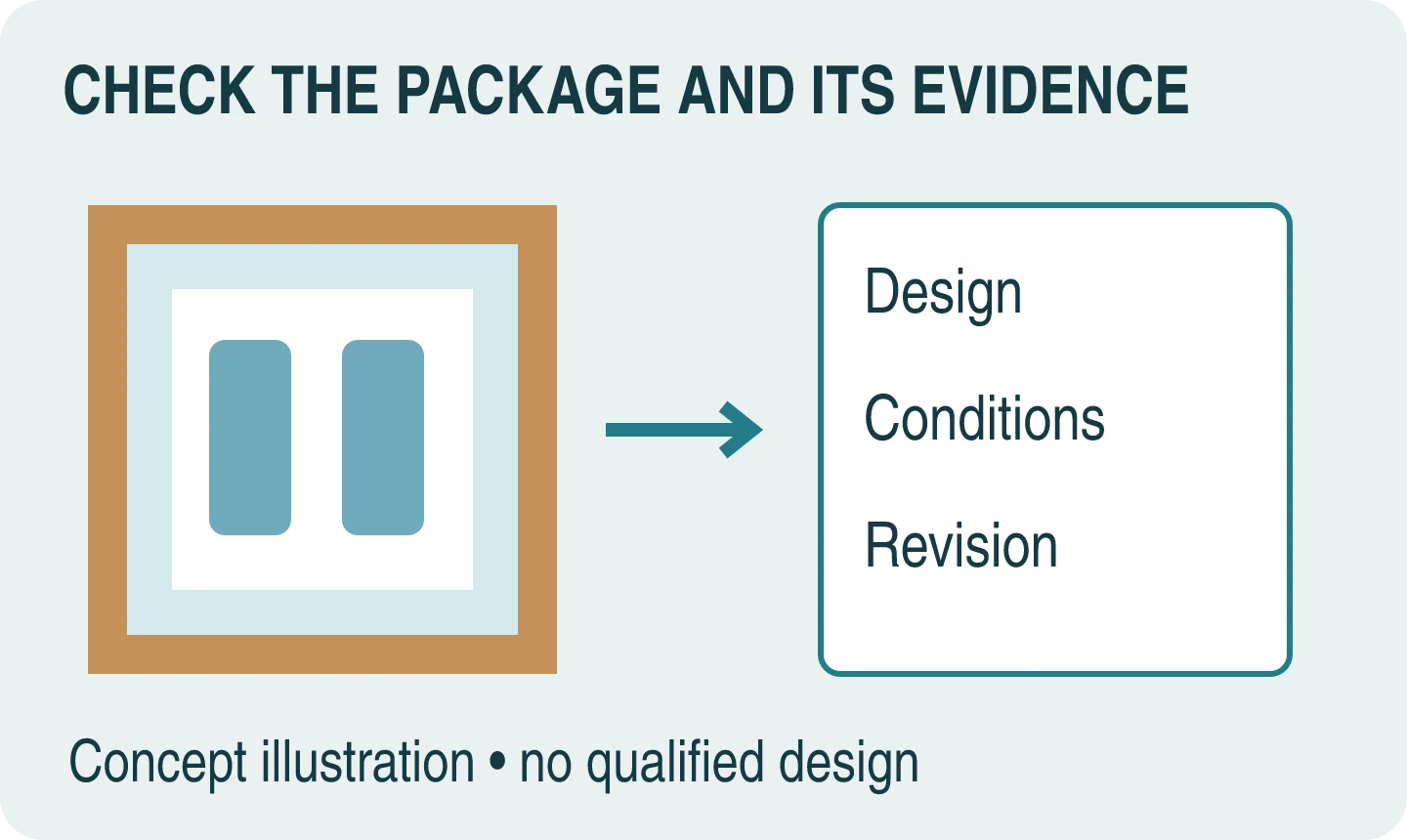
Choosing a supplier by a temperature claim alone can leave you with packaging that does not match your shipment. Evaluate cold chain packaging suppliers against a written use case, a defined supply scope and evidence for the exact configuration offered.
This guide helps procurement and packaging teams decide which candidates deserve technical evaluation. It covers manufacturers, complete-system providers and component suppliers without ranking companies or recommending a regional shortlist. The output is an evidence register with named owners and unresolved questions, not a supplier score presented as a test result.
| Input or item | Value or source | Why it matters |
|---|---|---|
| Product limits | Current product documentation approved for the project | Defines the temperature requirement |
| Shipment conditions | Route, duration and expected handling record | Defines the challenge |
| Payload | Proposed minimum and maximum loads | Identifies the configurations to assess |
| Supply scope | Candidate’s written offer and exclusions | Separates a component from a complete service |
| Evidence | Dated reports and assembly instructions | Connects claims to an identified design |
| Regional operation | Dispatch, support and return arrangements | Checks whether the offer can operate where needed |
Identify the supplier’s actual role
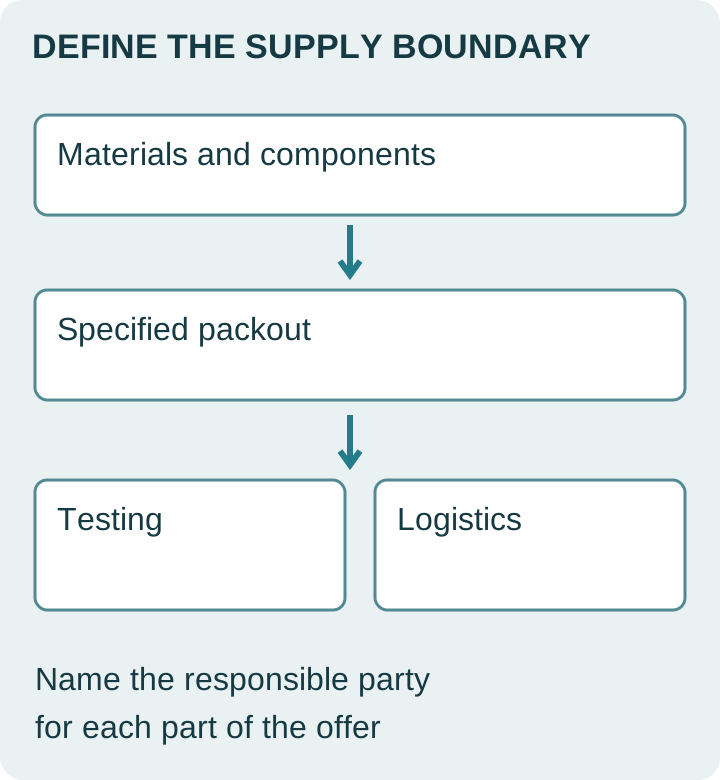
The word supplier does not tell you who designs or manufactures the packaging. ISTA’s public membership definition includes organizations supplying materials, goods or services for physical distribution. WHO’s shipping-container guidance separately describes a complete shipping system, its components and documentation supplied by a system manufacturer. Use those distinctions to describe the offer.
The categories below are a purchasing map, not an industry certification or mutually exclusive legal classification. One company may perform several roles.
| Role in the offer | What to establish | Record to request |
|---|---|---|
| Packaging manufacturer | Which container or component it makes, at which identified production site | Product specification, site identity and change-notification process |
| Complete-system provider | Who defines the assembled packout and owns its technical documentation | Configuration list, packing instructions and supporting report references |
| Component or consumable supplier | Which insulation, coolant, outer packaging or other item it supplies | Part identification, specification and permitted application boundaries |
| Testing or logistics service provider | Which assessment or operational step it performs | Defined service scope, relevant competence evidence and handoff responsibilities |
Begin with the procurement guide collection to locate the rest of the decision. Use the active versus passive packaging comparison when the type of system is still unsettled; a seller’s company category cannot settle that technical choice.
Common mistake: Treating a component catalogue as evidence for a complete, qualified shipping configuration.
Takeaway: Write down who makes, specifies, tests and supplies each part of the proposed offer.
Match the evidence to the configuration
Ask for identifiers before conclusions. A report becomes useful for supplier screening when you can connect it to the container, coolant, payload arrangement and instructions in the offer. Keep the technical review separate from the commercial comparison.
For pharmaceutical shipments, WHO Supplement 13 explains that qualification must address the intended conditions. Its discussion covers assembly, conditioning, load cases and transport exposure. It also restricts reliance on an existing OQ report when substitutions or design changes are made. Use the qualification-report review guide for the detailed reading; this page only identifies the documents to obtain.
| Evaluation criterion | Independently checkable evidence | Question if it is missing |
|---|---|---|
| Offered design is identifiable | Matching part numbers and configuration revision in offer and report | Which revision would actually be supplied? |
| Test conditions are relevant | Payload, ambient profile, duration and acceptance criteria in the report | Which of our shipment conditions remain outside the evidence? |
| Assembly is reproducible | Controlled packing and conditioning instructions | Who supplies training and resolves instruction changes? |
| Laboratory claim is specific | Named laboratory, certification scope and current listing where applicable | Is the claim about thermal testing or physical transport testing? |
| Changes are controlled | Written notification and technical-review responsibilities | Who assesses a substituted liner, coolant or source? |
| Supply can be maintained | Site, stock and replenishment information confirmed for the offer | What happens when the named item is unavailable? |
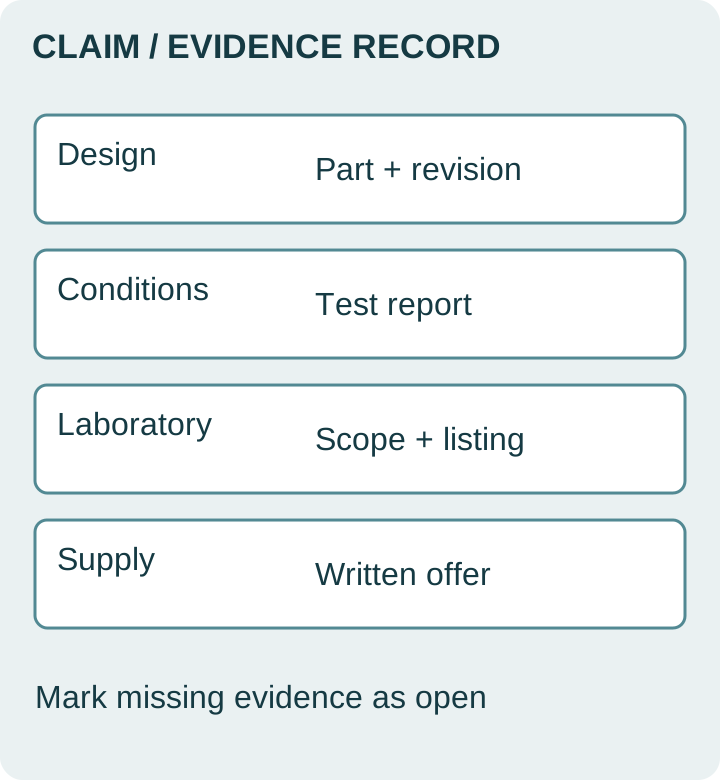
ISTA distinguishes transport testing laboratories from thermal testing laboratories. Its thermal certification description connects the Standard 20 design and qualification process with profile 7E. Membership, a laboratory listing and evidence for your offered configuration are different things; record exactly which one the candidate supplies.
Use insulated shipper selection to define the package inputs. Monitoring evidence may also require the data logger specification and calibration-certificate reading guide.
Takeaway: Accept a claim into the comparison only when its supporting record identifies the object and conditions.
Check regional supply through named information channels
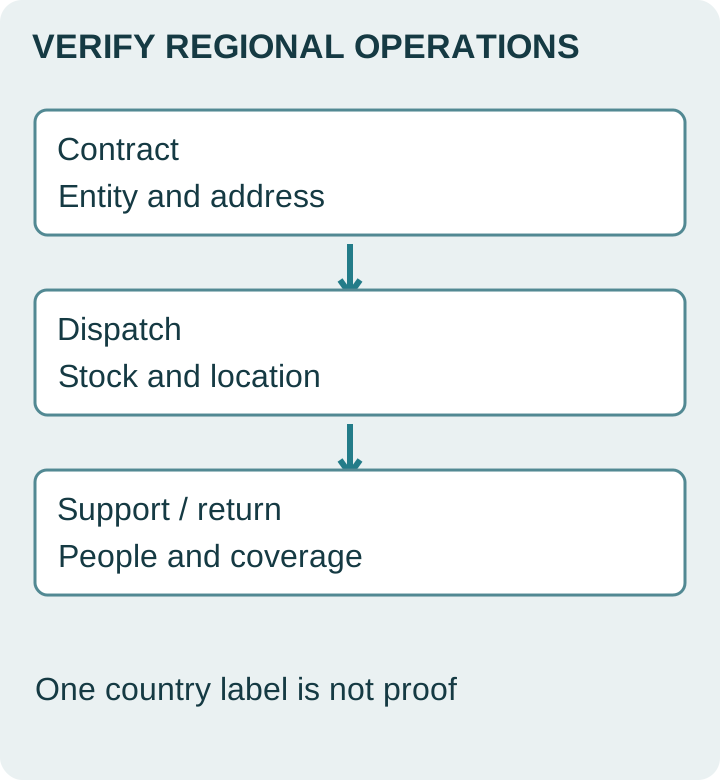
A website’s country page does not establish stock, manufacturing location or a support commitment. For UK or other regional sourcing, separate company identity from the operating arrangement. The questions below are suggested procurement checks; none asserts that a candidate already provides the service.
| Regional question | Information channel | What to retain |
|---|---|---|
| Which entity would contract and invoice? | Written offer, company register and invoice details | Legal name, registration identifier and address |
| Where would the offered configuration ship from? | Candidate’s written dispatch and stock confirmation | Dispatch location, availability date and responsible contact |
| Where are components made or substituted? | Technical specification and change-control response | Named source where disclosed, revision and notification owner |
| Who supports local packing staff? | Written service scope and escalation arrangement | Support hours, channel, training scope and exclusions |
| How would reusable packaging return? | Return-program documents and local collection terms | Collection coverage, inspection responsibility and charges |
| Which requirements apply to the route? | Carrier instructions and the buyer’s regulatory/quality review | Applicable documents and unresolved approvals |
For a UK company, GOV.UK points to Companies House records for company details. A register lookup helps establish identity; it does not demonstrate packaging performance, stock or the ability to supply a particular lane.
A packout-station assessment helps identify local operating needs. Keep return logistics and replenishment assumptions visible in the packout cost worksheet, rather than assuming a lower unit price settles the decision.
Takeaway: Verify the actual dispatch, support and return arrangement through documents tied to the offer.
Use the register to decide the next action
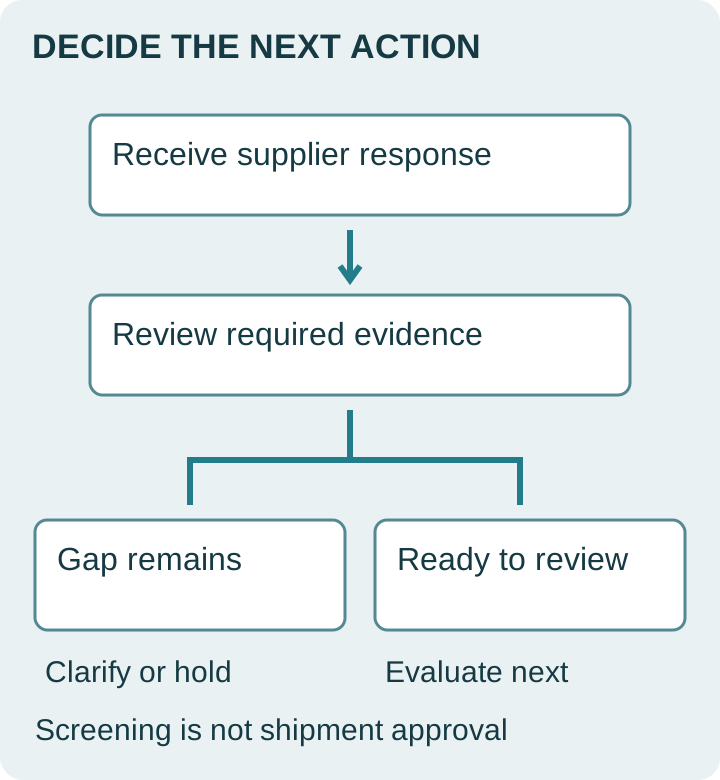
Use three statuses for each required item: evidence received, clarification needed or outside the offer. These are proposed workflow labels, not standardized scores. A total score could hide a missing critical requirement; make that requirement visible instead.
- Send the same use-case description to every candidate.
- Record the offered scope and the exact supporting documents received.
- Assign each unresolved point to a named person with a reply date.
- Advance a candidate only when the buyer’s responsible technical and quality reviewers accept the evidence needed for the next stage.
For equipment interfaces, move to the equipment RFQ checklist. For agreed acceptance work, use the FAT and SAT evidence guide. These are later decisions; neither replaces the packaging supplier’s configuration evidence.
Common mistake: Awarding points for a well-presented report without checking whether its configuration matches the proposed purchase.
Takeaway: Record the reason for progressing or holding a candidate, with its evidence reference.
When this does not apply
This screening method does not approve packaging for a medicine, food or biological material. Product limits, regulatory requirements and release decisions belong to the responsible organization and its applicable procedures. WHO Supplement 13 addresses pharmaceutical shipping containers; it is not a blanket rule for every chilled consumer shipment.
This page does not audit any factory, certify any laboratory or establish a company’s current regional capability. It also does not provide a supplier ranking. Candidates must answer for their actual offer and the buyer must review that evidence.
Takeaway: Use the register to organize evaluation, not to replace qualification or product-specific approval.
Frequently asked questions
These questions adapt published supplier-help questions from Tempk and Custom Pack Mart, checked October 7, 2026. They identify practical questions to resolve; the answers below are editorial purchasing guidance, not those suppliers’ promises or independent performance findings.
Can I order cold chain packaging samples before bulk production?
Discuss a sample stage before committing to the volume order. Record whether you need a dimensional sample, production-representative components or a complete test packout. Agree on costs and deliverables in writing; a sample that fits the product does not by itself qualify the shipping system.
What if the products I purchase do not work for my application?
Separate a documented supply defect from a configuration that was never assessed for the use case. Retain the offer, approved specification and acceptance records, then use the supplier’s agreed issue-resolution process. This guide establishes no right to a refund or replacement.
Can I reuse ice packs?
Request the specific component’s reuse and inspection instructions. A coolant that can be physically refrozen has not necessarily been assessed for repeated use in your shipping configuration. Keep reusable-system review separate from informal reuse of a household cooler pack.
How can I throw away ice packs?
Obtain the product’s disposal information and check the receiving location’s waste guidance. Do not apply one supplier’s instructions to an unidentified coolant formulation or assume the contents can go down a drain.
Can I include my own company logo on the packaging?
Confirm the artwork scope, minimum order, cost and production revision. Ask whether a requested change affects only printing or also changes the container or its materials. Record the approved version instead of assuming every customization is cosmetic.
Can you plan cold chain packaging for a 48-hour delivery?
A delivery duration is one input, not a complete thermal specification. State the start and end of the required protection period, route exposure and product limits. Ask for evidence against those conditions; a service transit estimate alone does not define the packaging challenge.
Methods and sources
This October 2026 guide combines the public ISTA supplier definition and laboratory-certification description with WHO’s published shipping-container guidance. The supplier categories and register statuses are our organizational suggestions. They are not an official certification scheme. The references below identify the documents and their scope.
A research-library search was followed by full-document reading. A Packaging Digest product-launch article supplied background on how component and whole-system claims appear in the market; no launch performance figure or named supplier endorsement is used here. We have not tested or audited any candidate.
Question wording was checked against Tempk’s published FAQ and Custom Pack Mart’s cold-chain packaging FAQ. Those pages establish the questions only. Their performance, environmental and commercial claims are not evidence for our answers.
Takeaway: Keep source-backed definitions separate from the proposed purchasing workflow and unverified supplier claims.
Related reading
- Qualification-report review examines the scope of a report after you receive it.
- Equipment RFQ checklist records interfaces and acceptance needs for equipment procurement.
- Packout cost worksheet keeps operating assumptions beside the purchase price.
Takeaway: Continue with the document or decision that your candidate response leaves unresolved.
Prepared by Cold Chain Practice Editorial Desk.
Related guides

Thermal Packaging Qualification Reports: Reading Conditions and Limitations
How to read a thermal packaging qualification report: check the test object, payload, temperature profile, duration, acceptance criteria and stated limits.
Read guide
Cold Chain Equipment Procurement: A Practical RFQ Checklist
Turn capacity, environment, interfaces, evidence, service and acceptance needs into a clear RFQ, with a copy-ready field table for packout equipment buyers.
Read guide
Cold Chain Packout Cost: A Transparent Comparison Worksheet
A transparent cost worksheet for cold chain packout: materials, labor, monitoring, return logistics and losses, with formulas and blank cells you fill in.
Read guide
FAT and SAT: Evidence to Agree Before Equipment Purchase
A buyer's checklist of FAT and SAT items to agree with the seller before purchase: protocols, test cases, deviations, sign-off and documents for packaging equipment.
Read guide