
How to Specify a Cold Chain Temperature Data Logger
A specification checklist for a cold chain temperature data logger: range, accuracy, logging interval, export method and calibration documents to request.
Who this guide is for and what it covers
A logger specification is a short document that tells a supplier what the device must measure, how it must record, how the data leaves the device and what paperwork comes with it. Without one, buyers compare data sheets that were written to look similar, and the differences surface after the first shipment. This guide covers the inputs to define for a cold chain temperature data logger used in shipments, storage or packout. It sits in the temperature monitoring section of this site, where related guides on workflow, calibration and evidence are collected.
It is written for equipment buyers, packaging engineers, warehouse teams and quality staff. It names no products and does not say what temperature limits your product needs; those come from your product documents and quality system.
Define the use case before the device
Write down five facts before opening any catalog.
- What is being measured: air inside a shipper, the product surface, a simulated product load (a probe in a buffered material), or ambient air in a room or vehicle. These give different readings and need different sensor types and placement.
- The temperature band the product document allows. Specify a logger range that covers the band with margin at both ends, plus the excursions you want to see. A logger that saturates at its range limit hides how bad an excursion was.
- How long the device must record unattended. Count dispatch preparation, the longest planned transit, plausible delays and the time until the data is read, then add your own safety margin.
- Who handles the logger and where. A trained packout operator is a different user from a consignee receiving a box at a clinic or a store.
- Where the data goes next: a quality record, a customer report, an investigation file, or all three.
If the lane includes air freight, ask whether the logger carries any restrictions or declarations for carriage, and check the carrier’s current requirements. If it includes ultra-low or frozen temperatures, confirm that the device and its battery are specified for them and not only for chilled use.
The eight attributes to specify
The diagram shows the attributes a specification should cover. Each is described after the figure.
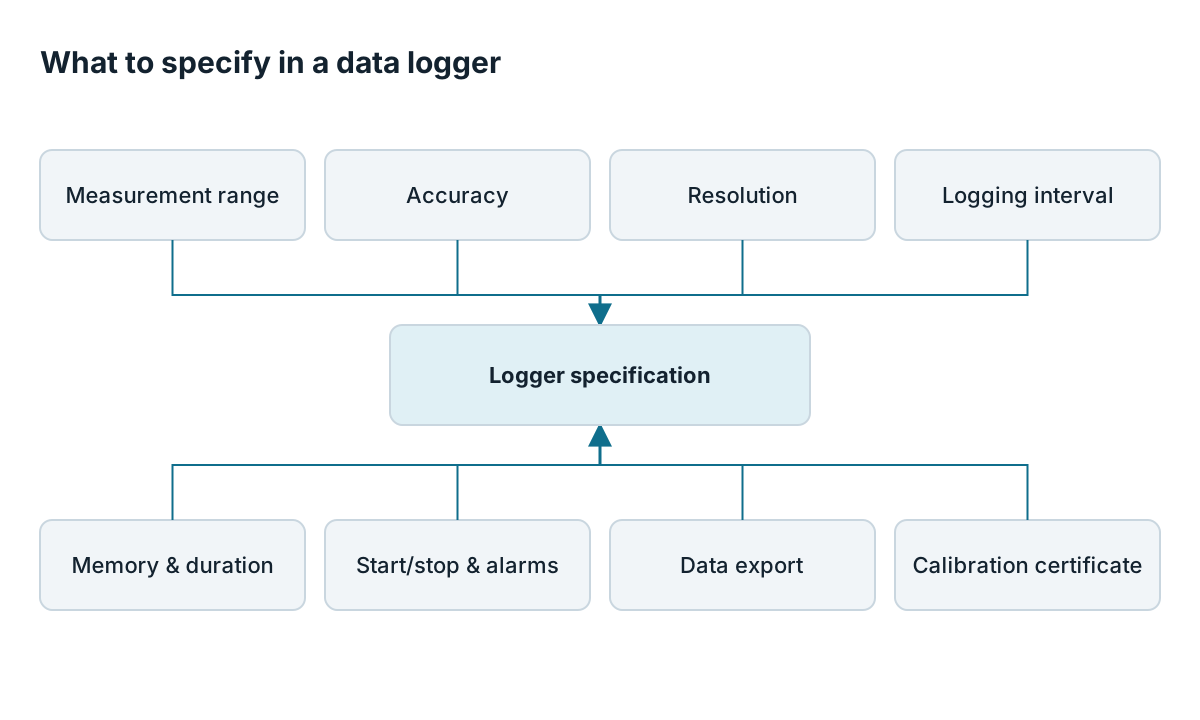
Measurement range. State the lowest and highest temperatures the device must measure and record, which can be wider than the band you plan to stay inside. Ask the supplier whether the stated range is the sensor range, the operating range of the electronics and battery, or both.
Accuracy. Ask for the accuracy statement and the conditions it applies to, for example whether it holds over the full range or only near one point. Accuracy on a data sheet is a claim by the supplier. Calibration evidence, covered below, is what supports it for an individual unit.
Resolution. Resolution is the smallest step the device can display or store, and it says nothing about accuracy. Specify one fine enough for the decisions you make from the data.
Logging interval. The interval sets how quickly a short excursion would show up. Choose it from how fast the load can change as well as from memory capacity. If the product sits in a shipper with long thermal inertia, a longer interval may be adequate. If the logger sits in an open pallet position or a vehicle cargo area, a shorter one is usually justified. Ask whether the interval can be changed by the user and whether that change is recorded.
Memory and duration. Confirm what happens when memory is full, whether the device stops or overwrites the oldest data. Multiply the interval by the planned duration plus margin and check it against stated memory.
Start, stop and alarms. Decide who starts the logger and how that is verified. Push-button start, software start and delayed start each have different failure modes, such as a logger started too early so that the battery or memory runs out before delivery. Ask whether a stop can be done accidentally in transit, and whether alarm thresholds are set before dispatch and shown in the data file.
Data export. Specify the file format, the way it leaves the device (cable, wireless, cloud) and whether the receiver needs special software. If a consignee cannot open the file, the logger has delivered no evidence. Ask for a sample export file before purchase.
Calibration certificate. State that each unit ships with its own certificate and what it must show. The companion guide on reading temperature sensor calibration certificates lists the checks to apply when the documents arrive.
Comparing logger types and workflows
The table gives conditional guidance by logger type, not a ranking.
| Type | Typical fit | Main trade-off | Ask the supplier |
|---|---|---|---|
| Single-use PDF-output logger | Shipments where the logger travels with the box and the receiver wants a ready report | Per-shipment cost and limited setup flexibility | Is the report file editable, and how is the report generated? |
| Reusable logger with software | Packout sites that run many lanes and want custom intervals and alarms | Needs a download station, a software owner and a reset routine | How is the device reset, and is the start recorded? |
| Logger with external probe | Measuring product-simulating loads or hard-to-reach positions | Probe handling and placement variation | How is the probe attached, and is it covered by the calibration? |
| Real-time cellular or network device | Lanes where action during transit matters | Network coverage, battery life and data service | What happens to data when the network is lost? |
| Fixed room or vehicle recorder | Storage areas and vehicle cargo spaces | Installation, alarm response and periodic verification | Which standard does the recorder state conformity with? |
For a decision between a downloadable unit and a device that reports during transit, read the guide on real-time versus downloadable logger workflows. If your use case is a room or storage area, check whether you actually need a study of the space first; the difference is explained in temperature mapping versus shipment monitoring.
Software, records and data integrity
If the logger data supports a regulated quality decision, ask what the software does to protect the record. Is access controlled by user? Is there an audit trail for changes to settings and for data handling? Can the original data file be exported unaltered, and can a report be tied back to it? Regulations on electronic records, such as 21 CFR Part 11 in the United States, set expectations for some uses. Read the current text and have your quality group decide whether it applies to your process. A supplier’s statement that its software is “compliant” does not replace your own assessment.
Installation, handling and maintenance
A specification that stops at the data sheet misses most failures. Add these items:
- Placement rule. Define where the logger goes in the pack (against the product, in the center of the load, or near the warmest or coldest expected position) and write it as an instruction with a picture.
- Conditioning. A logger at room temperature placed in a cold pack can read the room instead of the product. Define how long a logger is held at the product temperature before use, based on your own process.
- Battery and storage: shelf life, storage conditions, and how the battery state is checked before dispatch.
- Cleaning and reuse. For reusable devices, define cleaning, inspection and replacement criteria.
- Periodic verification. Fixed recorders and reusable loggers need a verification or recalibration interval. Standards such as EN 13486 address periodic verification of recorders; check the current version and your own procedures for the interval.
Handover points and data responsibility
Name an owner for each step: who sets up and starts the logger, who confirms it is running, who removes it, who downloads the data, who reviews it and who stores it. At each handover, state what is written down. A frequent failure is a logger that records faithfully but nobody opens the file until a complaint arrives.
Decide in advance what the reviewer does with a result. A specification can define thresholds for flagging a record, but whether a product is usable is for your quality unit and the product documentation to decide. The logger supplier and this site cannot.
Evidence to request from suppliers
- A data sheet with range, accuracy conditions, resolution, memory and battery information.
- A sample calibration certificate and the laboratory’s accreditation scope, if the lab states one. ISO/IEC 17025 is the standard commonly referenced for calibration laboratory competence; check the current version and what the scope covers.
- A sample data file and sample report in the format you will receive.
- The software description, including user access and audit trail features, if you need them.
- Instructions for start, stop, reset and placement.
- Statements of conformity to any standard they cite, such as EN 12830 for food-chain recorders, with the version and what was assessed.
Purchasing checklist
- Measured location defined: air, product surface or simulated load.
- Required range covers the product band plus the excursions you want to see.
- Accuracy statement obtained with its conditions.
- Logging interval chosen from load behavior and agreed with quality.
- Memory checked against interval, planned duration and margin.
- Start, stop and alarm settings defined, with an owner for each.
- Export format and software requirements confirmed with a sample file.
- Calibration certificate content stated in the purchase specification.
- Placement and conditioning instructions written and illustrated.
- Verification interval and cleaning routine defined for reusable devices.
- Data review owner and storage location named.
- Specification attached to the request for quotation. See the equipment RFQ checklist for how to package it with other requirements.
Scope note: This guide helps you write a specification. It does not set acceptance limits, decide whether a product can be used after an excursion, or recommend any brand or model. Product temperature limits come from the product documentation and your quality system.
Limitations of this guide
This guide describes general specification practice. It has not been tested against any specific logger, and Cold Chain Practice has not run measurements or trials of devices. It does not cover every regulatory regime, and standards named here are mentioned only by title and purpose; clause requirements, scope and current versions must be checked at the source. Regional, carrier and customer rules differ and can add requirements. Where a decision affects product quality or patient or consumer safety, it belongs to qualified staff at your organization.
Related guides
Real-Time Tracking or Downloadable Loggers: Which Workflow Fits?
Compare real-time and downloadable temperature monitoring by when data arrives, alarm response, network dependence and cost structure, lane by lane.
Read guide
What a Temperature Sensor Calibration Certificate Should Tell You
Check a temperature sensor calibration certificate for device identity, range, dates, reference traceability and results before you accept a logger.
Read guide
Temperature Mapping vs Shipment Monitoring: Different Questions, Different Evidence
Separate facility temperature mapping from shipment monitoring: the questions each answers, the evidence each produces and where buyers mix them up.
Read guide
Cold Chain Equipment Procurement: A Practical RFQ Checklist
Turn capacity, environment, interfaces, evidence, service and acceptance needs into a clear RFQ, with a copy-ready field table for packout equipment buyers.
Read guide