
UPS Refrigerated and Frozen Shipping Cost Drivers: Dimensional Weight, Dry Ice Fees and Lane Cutoffs
Prepare a refrigerated or frozen parcel quote: check packed dimensions, dry-ice fee conditions, service commitments and tender cutoffs.
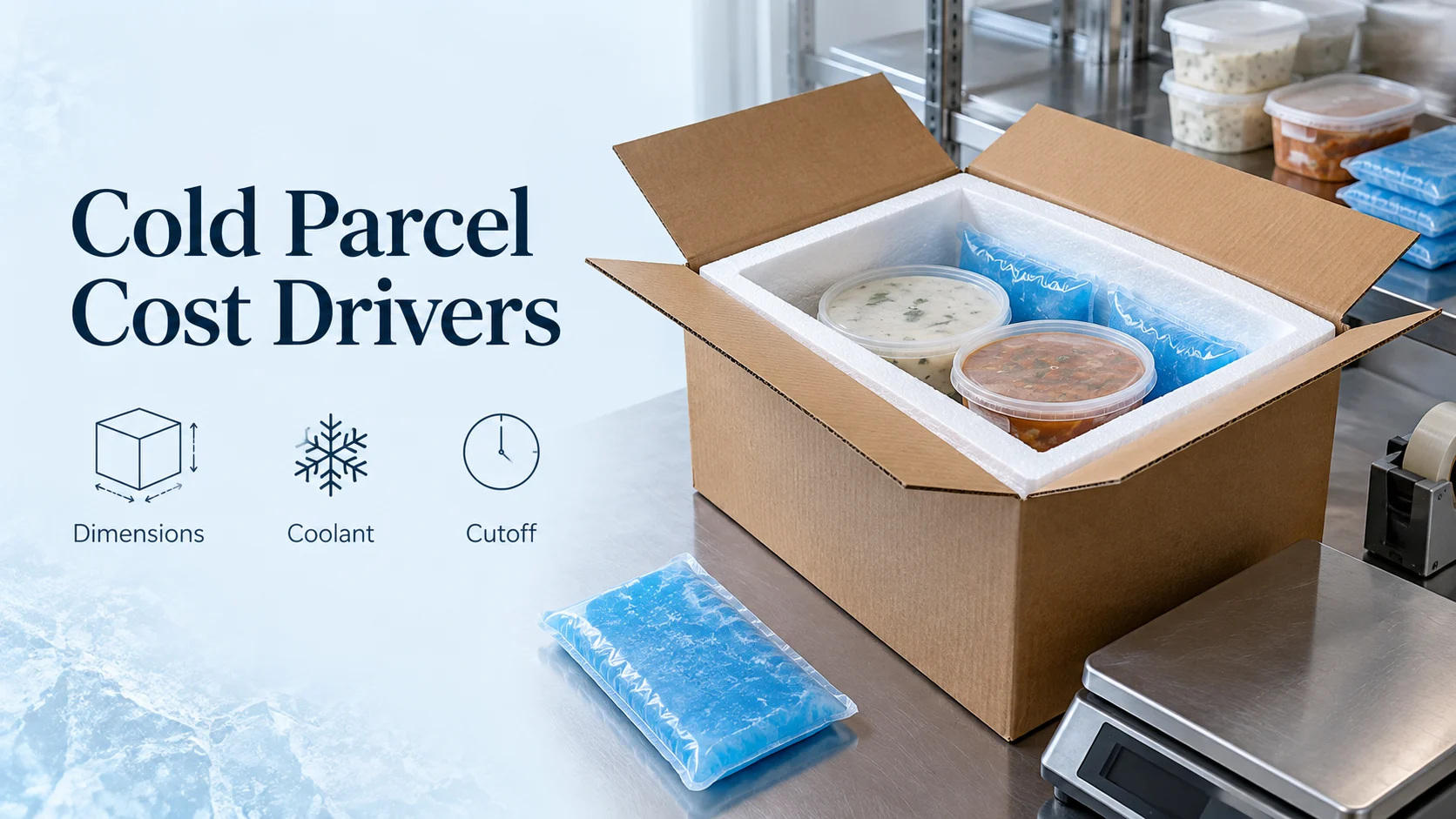
Start a UPS refrigerated shipping cost comparison with the packed parcel, then work through the dry-ice conditions and the dispatch plan. For UPS Daily Rates package shipments, billable weight is the greater of actual package weight and dimensional weight.
Use this guide to prepare U.S. refrigerated and frozen parcel quote requests. Record the account basis, carton measurements, coolant, lane and service commitment together. For the wider purchasing workflow, visit our procurement guide.
Set the quote scope before comparing rates
Ask for an itemized quote against the following brief. Keep the same fields when requesting UPS cold shipping rates or a FedEx temperature-controlled shipping cost comparison.
Table: scroll horizontally if needed to see every column.
| Quote input | What to record |
|---|---|
| Service and account | Carrier, service name, account/rate basis and quote date |
| Packed parcel | Outside length, width, height and gross packed weight |
| Contents and coolant | Commodity, intended temperature condition, coolant type and quantity |
| Lane and timing | Origin, destination, ship date and required delivery commitment |
| Handover and receipt | Tender location, acceptance cutoff, delivery option and recipient arrangements |
| Price breakdown | Transportation, fuel, applicable accessorial charges and packaging/service line items |
Specify whether the request is for your own insulated packout or a named carrier-provided cold shipping package. FedEx offers a cold shipping package with a built-in chilling unit. Keep that package name explicit in the quote request. Review parcel carrier cold shipping alongside the pricing brief.
Measure the packed carton for UPS Daily Rates
Daily rates apply to customers with a scheduled pickup and/or an account providing daily rates. Use the following sequence for UPS Daily Rates package shipments:
- Actual package weight is rounded up to the next whole pound.
- Measure each dimension at its longest point and round fractional measurements up.
- The minimum measurement for each dimension is 1 inch.
- Multiply package length by width by height to obtain cubic size in inches.
- Divide cubic size in inches by 139 to determine dimensional weight in pounds.
- Increase any fractional dimensional weight to the next whole pound.
Record both the actual-weight result and the dimensional-weight result in your quote file.

What changes when comparing FedEx?
For FedEx dimensional-weight measurements, any fraction of an inch is rounded up to the next-higher inch. FedEx applies dimensional weight to all shipments in customer packaging. FedEx may apply dimensional weight to shipments in FedEx packaging. For FedEx shipments, charges may be based on dimensional weight when it exceeds actual weight. Retain each carrier’s calculation with its quote.
Specify insulation and coolant together
FedEx’s perishable-shipping weight guidance includes packaging, contents and refrigerants. UPS recommends gel packs in an insulated container for food intended to remain unfrozen. Thicker insulated foam container walls reduce the coolant needed. Record the selected liner and coolant quantity beside the packed dimensions and weight. For frozen shipments, identify the dry-ice quantity separately in the request.
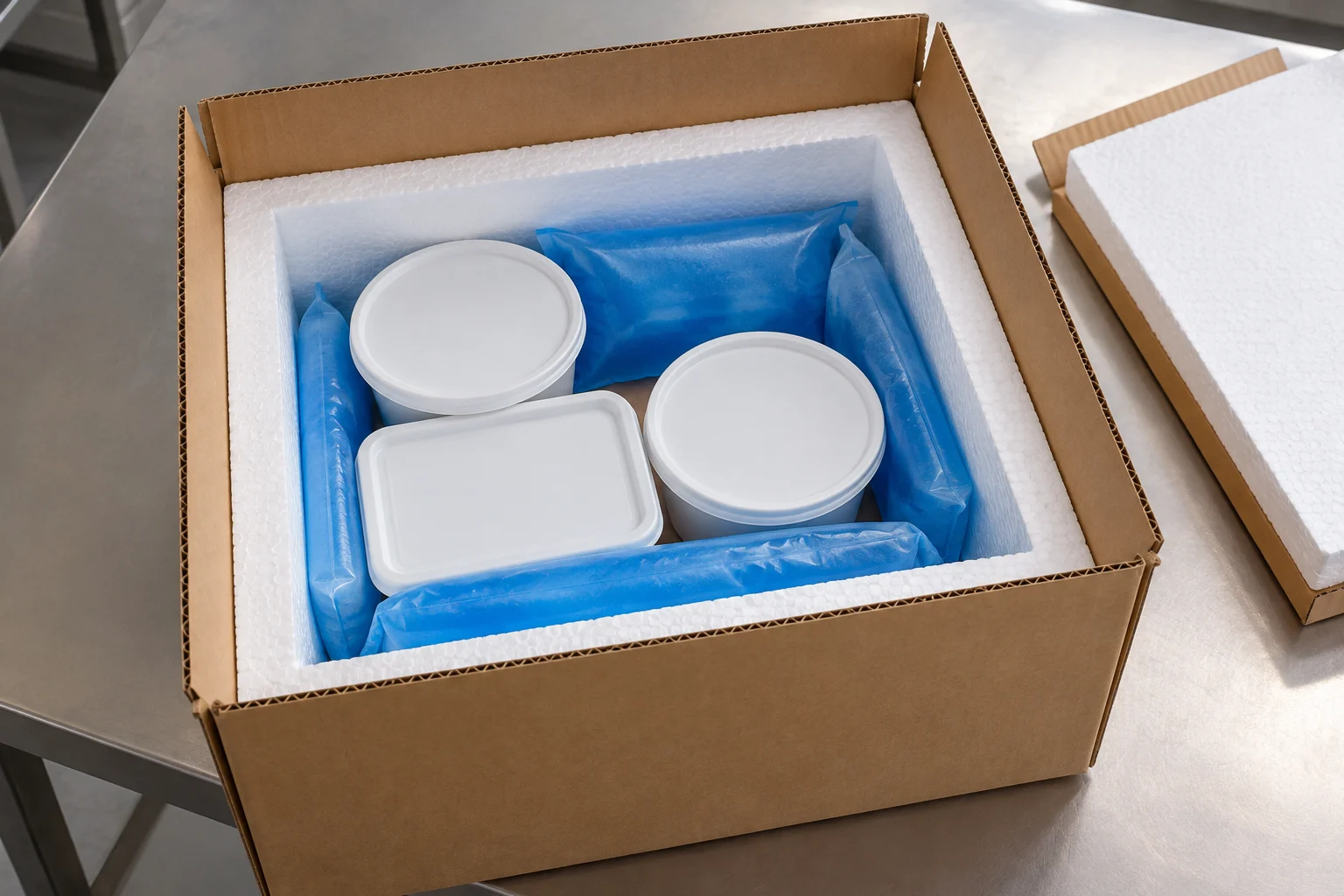
Use the packout-cost worksheet for the packaging cost record, then bring the freight quote into the comparison.
Check the dry-ice fee branch
Choose the carrier, mode, geography and contents category before assigning any dry-ice fee line.
UPS domestic air: retain the quantity and contents conditions
For non-medical, non-hazardous U.S. domestic air packages with 2.5 kg (5.5 pounds) or less of dry ice prepared under 49 CFR, no hazardous material accessorial charges will be applied. For non-medical U.S. domestic packages with greater than 2.5 kg (5.5 pounds) of dry ice under IATA or 49CFR regulations, an acceptance audit is performed. For that larger-quantity UPS category, UPS directs shippers to its Rate and Service Guide for the dry ice accessorial fee.
UPS geography and international service
UPS dry-ice shipments to and from Alaska, Hawaii, Puerto Rico and Avalon, CA must be processed as air shipments. UPS international dry ice shipping is available on a contractual basis only.
FedEx mode and dangerous-goods treatment
Dry ice is considered a dangerous good or hazardous material when shipped by air. Dry ice is not regulated as a hazardous material when shipped with FedEx Ground services. For FedEx dry-ice shipments that also contain dangerous goods, only the dangerous goods surcharge will be included (not a separate dry-ice surcharge). Match the fee line to the shipment category. Use the dry-ice shipping regulations guide for the preparation checklist.
Confirm the lane cutoff and delivery commitment
FedEx overnight drop-off deadlines vary by location. For FedEx overnight shipping, the shipment must meet the cutoff time to be delivered the next day. Not all FedEx drop-off locations accept dangerous-goods shipments. Record the intended tender location, its acceptance cutoff and its dangerous-goods acceptance before finalizing dispatch.

For food shipments, UPS recommends planning for a maximum transit time of 30 hours for best results. For food shipments, UPS recommends shipping early enough in the week to avoid a package sitting over a weekend. Under FedEx U.S. perishable-shipment terms, perishable shipments must be packaged for at least 24 hours beyond the delivery commitment.
Compare the delivery commitment and the packout requirement in the same record.
Service and surcharge checks
For FedEx overnight service, a delivery commitment later in the day typically lowers the shipping cost. For FedEx overnight service, shipping farther usually increases shipping cost. FedEx overnight Saturday delivery is available in certain areas for an additional charge. The UPS U.S. domestic air fuel surcharge is adjusted weekly. UPS fuel surcharges apply to transportation charges and certain other charges. FedEx demand surcharges apply during specified times to packages meeting carrier-defined criteria.
Refrigerated and frozen parcel quote reconciliation checklist
Copy these prompts into your purchasing record and complete them against each quote:
- Scope: Which named service, account basis and packaging option did you request?
- Measurement: Have you recorded the closed carton’s outside dimensions and gross packed weight?
- Billing: Which weight did the quote use, and where is the carrier calculation?
- Coolant: Which coolant and quantity are specified? Which dry-ice fee category was applied?
- Lane: Do the origin, destination, ship date and delivery commitment match your request?
- Tender: Is the chosen location’s acceptance and cutoff recorded?
- Receipt: Have you selected the required delivery option and arranged recipient availability?
- Charges: Have you reconciled transportation, fuel and applicable accessorial charges against the itemized quote?
- Handoff: Have you saved the quote and packout specification together?
Take the completed freight record back to the packout-cost comparison.
Sources
- UPS — U.S. Daily Rate and Service Guide
- FedEx — How to Ship Perishables
- UPS — Daily Shipping Rates and Zone Charts
- FedEx — Service Guide, dimensional weight and demand surcharges
- UPS — How To Ship Food
- UPS — Shipping with Coolants and Refrigerants
- FedEx — How to Ship With Dry Ice
- FedEx — Overnight Shipping for Next Day Delivery
- FedEx — Service Guide, U.S. perishables terms
- UPS — Fuel Surcharges
Related guides
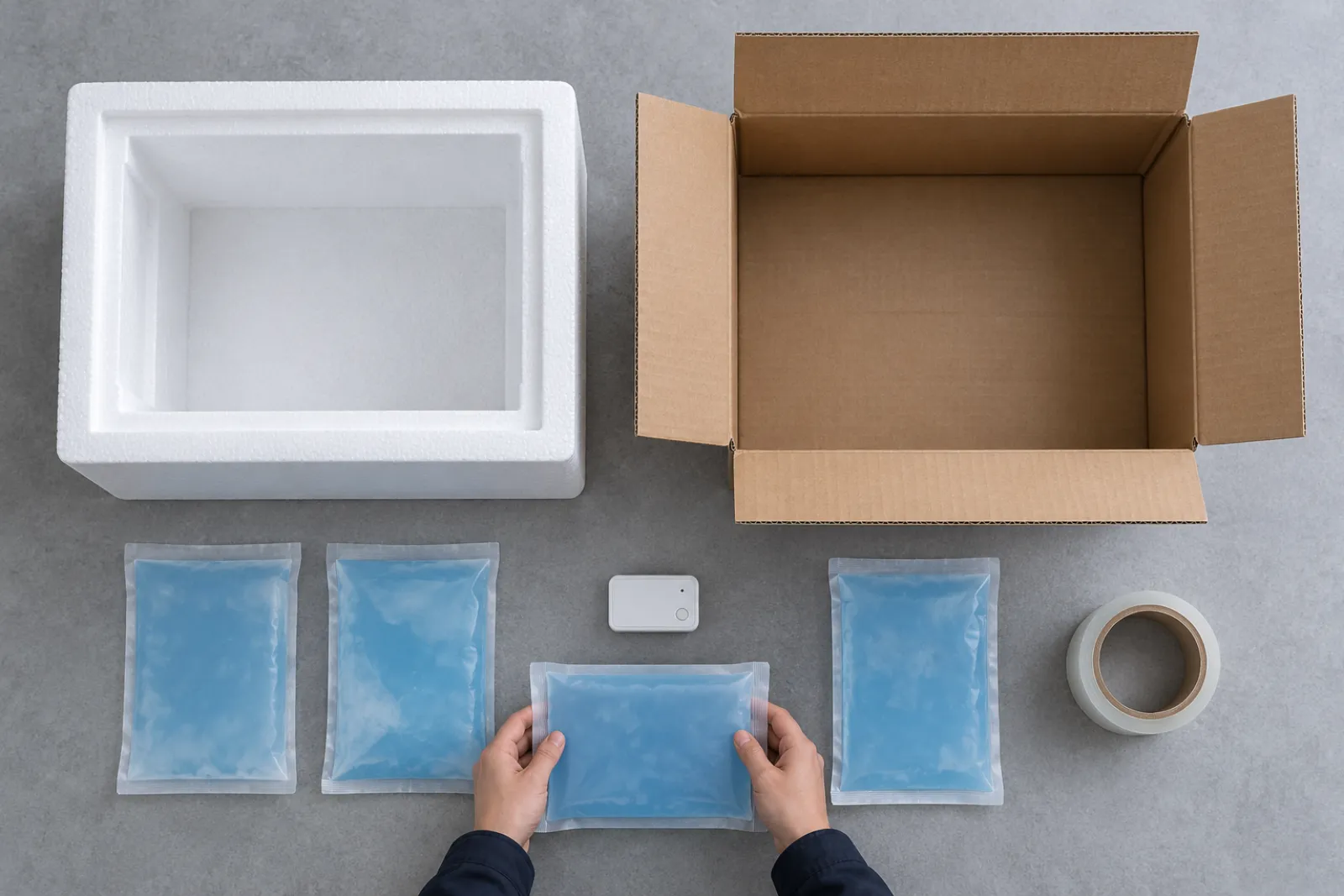
Cold Chain Packout Cost: A Transparent Comparison Worksheet
A transparent cost worksheet for cold chain packout: materials, labor, monitoring, return logistics and losses, with formulas and blank cells you fill in.
Read guide
Cold Chain Equipment Procurement: A Practical RFQ Checklist
Turn capacity, environment, interfaces, evidence, service and acceptance needs into a clear RFQ, with a copy-ready field table for packout equipment buyers.
Read guide
FAT and SAT: Evidence to Agree Before Equipment Purchase
A buyer's checklist of FAT and SAT items to agree with the seller before purchase: protocols, test cases, deviations, sign-off and documents for packaging equipment.
Read guide
Thermal Packaging Qualification Reports: Reading Conditions and Limitations
How to read a thermal packaging qualification report: check the test object, payload, temperature profile, duration, acceptance criteria and stated limits.
Read guide