
Vaccine Cold Chain Storage and Transit: +2°C to +8°C vs Frozen Bands, Vial Monitors and Excursion Evidence
Set vaccine refrigerator, freezer and ultra-cold bands, freeze-isolation packout checks, vial monitors versus data loggers, and the excursion evidence fields to keep at handover.
Vaccine cold chain temperature work starts with the labeled band for the product in front of you, then the coolant and barrier that keep that band intact in transit, then the monitors and records that prove what happened. This page sits in the Applications section and covers those three checks for vaccine storage and transit. General pharmaceutical packout equipment selection stays in the pharmaceutical packout guide. Line-by-line chart clock review stays in shipment temperature chart review. PCM nucleation and staging physics stay in phase-change material conditioning checks.
Vaccine storage temperature bands
Vaccine refrigerators must maintain temperatures between 2°C and 8°C (36°F and 46°F) at all times. Vaccine freezers must maintain temperatures between -50°C and -15°C (-58°F and +5°F) at all times. Ultra-cold vaccine freezers must maintain temperatures between -90°C and -60°C (-130°F and -76°F) at all times. Thermostats should be set at the factory-set or midpoint temperature, such as 5°C (41°F) for refrigerators or -20°C (-4°F) for freezers, to help reduce the risk of temperature excursions.
WHO temperature monitoring verifies that vaccine storage temperatures stay within acceptable ranges of +2°C to +8°C in cold rooms and vaccine refrigerators and -25°C to -15°C in freezer rooms and vaccine freezers. In primary and subnational stores, oral polio vaccine (OPV) should be stored in freezers at -25°C to -15°C to preserve its potency for as long as possible.
If stored frozen, mResvia (an RSV vaccine) must be stored between -40°C and -15°C (-40°F and 5°F); if stored alongside other frozen vaccines, the unit must not fall below -40°C. Live varicella and Zostavax vaccines stored frozen between -50°C and -15°C (-58°F and +5°F) may be temporarily stored at refrigerated temperatures (2°C to 8°C [36°F to 46°F]) for up to 72 hours before use. CDC warns not to use dry ice even for temporary transport or storage of frozen vaccines because dry ice might expose frozen vaccines to temperatures colder than -50°C (-58°F).
Table: scroll horizontally if needed to see every column.
| Band | Bound to keep |
|---|---|
| Refrigerator (CDC) | 2°C to 8°C (36°F to 46°F) |
| Freezer (CDC) | -50°C to -15°C (-58°F to +5°F) |
| Ultra-cold freezer (CDC) | -90°C to -60°C (-130°F to -76°F) |
| Cold room / vaccine refrigerator (WHO) | +2°C to +8°C |
| Freezer room / vaccine freezer (WHO) | -25°C to -15°C |
Storage unit placement and stabilization
CDC ranks vaccine storage units in four preference tiers, with units conforming to NSF/ANSI Standard 456 ranked first because they are rigorously tested for vaccine storage. Dormitory- or bar-style combined refrigerator/freezer units with a single exterior door and an evaporator plate/cooling coil must never be used for vaccine storage, even temporarily, because they pose a significant risk of freezing vaccines. Vaccine storage units should be positioned in a well-ventilated room with at least 2 inches (5 cm) of clearance from the ceiling, 1 to 2 inches (2.5 to 5 cm) from adjacent walls, and 1 to 2 inches above the floor, at standard indoor room temperatures between 20°C and 25°C (68°F and 77°F). A newly installed or repaired refrigerator may take 2 to 7 days to stabilize temperature (and 2 to 3 days for a freezer), and is considered stable after 2 consecutive days of recorded temperatures within the recommended range. WHO Effective Vaccine Management (EVM) standards require all cold and freezer rooms to be temperature mapped routinely every 2 years because temperatures in a particularly large warehouse can vary by as much as 10°C from one location to another.
Freeze-sensitive vaccines and packout isolation
Once vaccine potency is lost, it cannot be restored; for refrigerated vaccines, a single exposure to freezing temperatures of 0°C (32°F) or colder can completely destroy vaccine potency. Vaccine appearance is not a reliable indicator of proper storage because inactivated vaccines exposed to freezing temperatures may not appear frozen and give no visual indication of reduced or lost potency. Freezing can irreversibly damage vaccines containing aluminium-salt adjuvants (aluminium phosphate or aluminium hydroxide) because the adjuvant clumps together (agglomerates) when frozen. Aluminium adjuvants are included in vaccines containing diphtheria toxoid, tetanus toxoid, and hepatitis B antigens as well as the diluent for the meningitis A conjugate vaccine; some oral cholera, inactivated polio, and influenza vaccines are also damaged by freezing.
In the WHO shake test for suspected freeze damage, the frozen-and-thawed control vial and the test vial are held together and vigorously shaken for 10–15 seconds, then placed side-by-side on a flat surface and observed for 30 minutes. In the WHO shake test, if the sedimentation rate in the Test vial is slower than in the Frozen control vial, the vaccine has not been damaged and has passed the shake test.
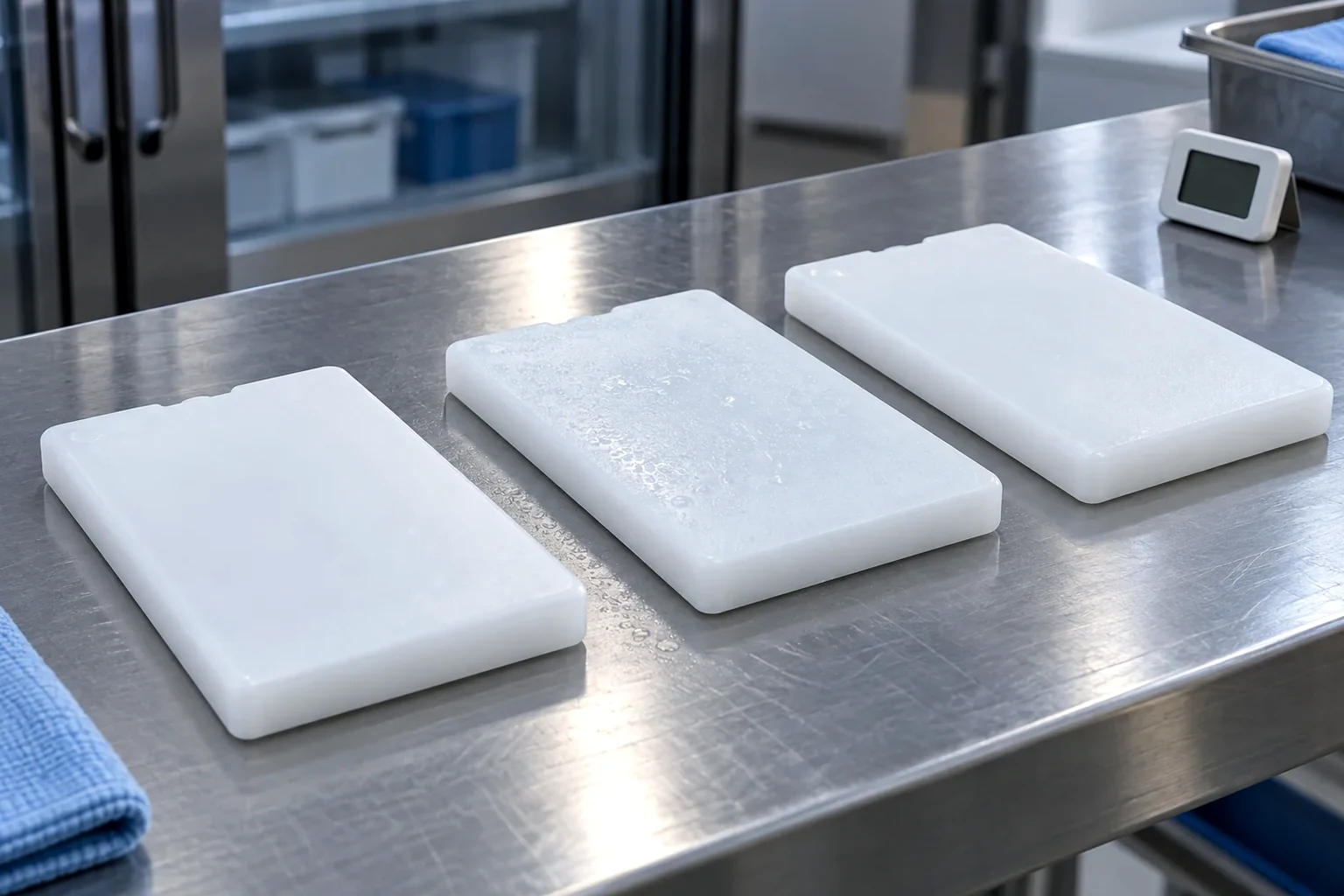
Ice packs come out of the freezer at about -20°C and must be conditioned at room temperature until the ice core rises to 0°C, which takes up to 1 hour at +20°C, to prevent freezing of freeze-sensitive vaccines during transportation. In PATH’s empirical study of WHO procedure EVM-SOP-E7-04, an ice pack is properly conditioned after stabilizing at 0°C, and conditioning times for ice packs frozen at -25°C in 20°C to 23°C ambient temperatures can vary by up to 39 minutes depending on ice-pack configuration. In UNICEF vaccine carrier and cold box guidelines, an ice pack is a water-pack frozen between -5°C and -20°C before use; frozen icepacks are used only for OPVs and similar vaccines, whereas conditioned icepacks or cool water packs between +2°C and +8°C are used for freeze-sensitive vaccines in non-freeze-preventative carriers.
For vaccine carriers with freeze-prevention technology, the temperature inside the vaccine storage compartment must remain above 0°C during the cold life test at +43°C ambient and during the minimum rated ambient temperature test at +15°C. Freeze-preventive vaccine carrier designs must eliminate the possibility of vaccine packages being exposed to air temperatures reaching 0°C or contacting surfaces with a temperature of 0°C or less under any specified test conditions. If cool-packs are used in insulated boxes, they need to be located such that the medicinal product does not come in direct contact with the cool-pack, and staff must be trained on seasonal assembly configurations and on the reuse of cool-packs.
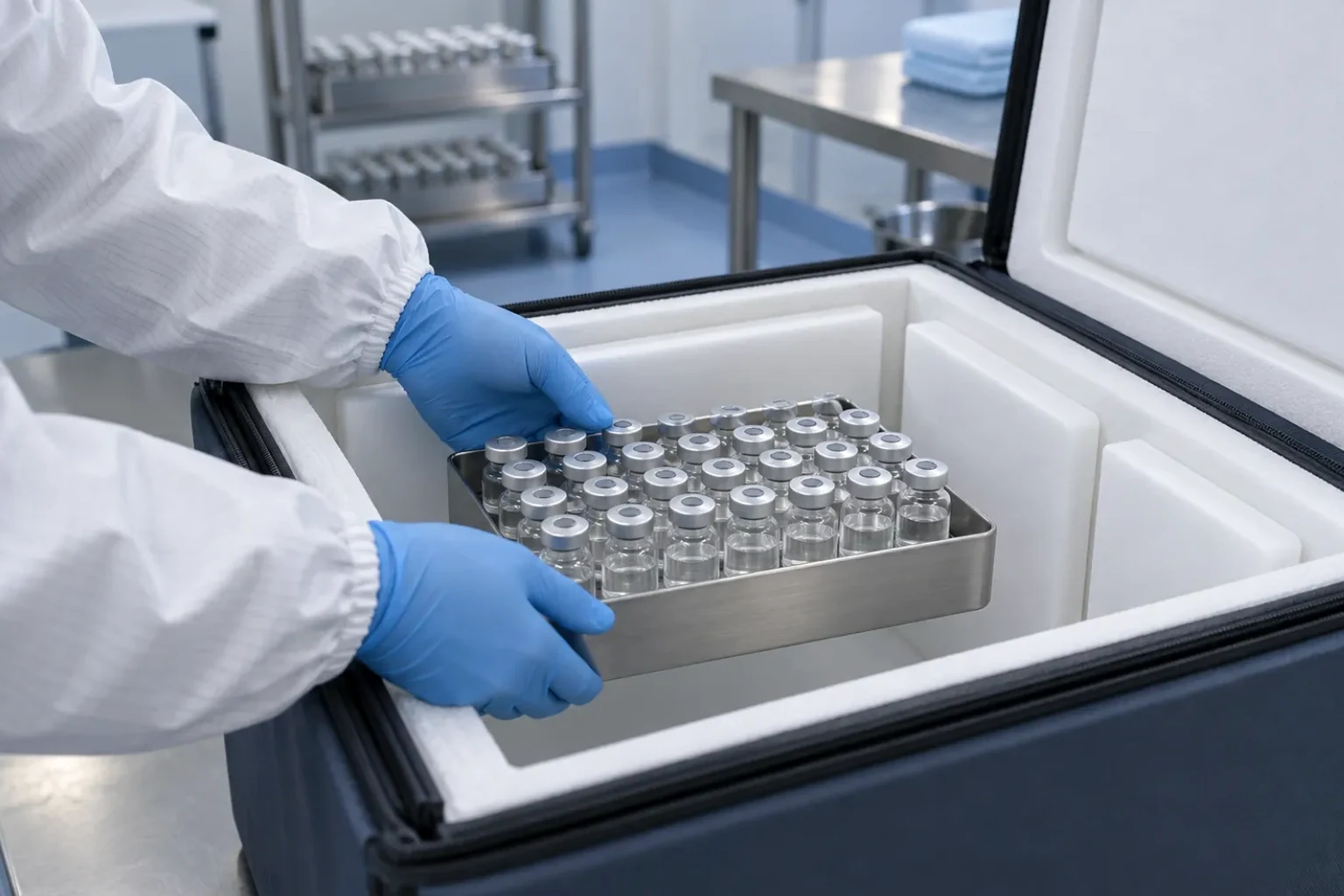
For non-emergency vaccine transport, CDC specifies phase change materials (PCMs) conditioned between 4°C and 5°C (39°F and 41°F) or conditioned frozen 16.9- or 8-ounce water bottles, with bubble wrap and corrugated cardboard forming two layers per container. CDC warns never to use frozen gel packs or coolant packs from original vaccine shipments to pack refrigerated vaccines because they can still freeze vaccines even if they are conditioned or appear to be sweating. Vaccine diluents stored at room temperature (20°C to 25°C [68°F to 77°F]) should be refrigerated in advance before transport with refrigerated vaccines, must never be frozen, and require an insulating barrier like bubble wrap between diluents and conditioned water bottles or PCMs.
TIC conditioning requires laying panels flat in a -18°C or colder freezer for a minimum of 24 hours, shaking the panels to verify no liquid can be heard, and room-temperature staging (+22°C) until an optional IR gun check at the center stand-off reads between +3°C and +4.5°C. Under rotational conditioning, frozen TIC panels are placed inside a refrigerated (+2°C to +8°C) environment to reach a minimum usable temperature of +2°C, and the PCM within the TIC system will never melt if a refrigerated temperature of +3°C (±1°C) is maintained.
Cold chain monitoring for vaccines
A Vaccine Vial Monitor (VVM) is a chemical-indicator label applied to a vaccine vial or ampoule that records cumulative heat exposure; if the inner square is the same colour as or darker than the outer circle, the vaccine should be discarded, and VVMs do not record exposure to freezing temperatures. VVM 30 (high stability) reaches its discard point in 30 days at +37°C, 193 days at +25°C, and over 4 years at +5°C. VVM 14 (medium stability) reaches its discard point in 14 days at +37°C, 90 days at +25°C, and over 3 years at +5°C. VVM 7 (moderate stability) reaches its discard point in 7 days at +37°C, 45 days at +25°C, and over 2 years at +5°C. VVM 2 (least stable) reaches its discard point in 2 days at +37°C and 225 days at +5°C.
30-day electronic temperature recorders (30 DTRs) log the refrigerator temperature at 10-minute intervals or less for 30 consecutive days and trigger alarms if the temperature drops to -0.5°C or below for 60 minutes or exceeds +8°C for a continuous period of 10 hours. WHO PQS irreversible electronic freeze indicators (such as Freeze-Tag under PQS specification E006/IN03.1) trigger an irreversible ALARM status symbol (X) if exposed to a temperature below -0.5°C ±0.5°C for more than 60 minutes ±3 minutes. Whenever freeze-sensitive vaccines are transported with conditioned ice-packs in cold boxes or vaccine carriers, WHO states it is essential to include an electronic freeze indicator because ice-packs may not have been conditioned correctly.
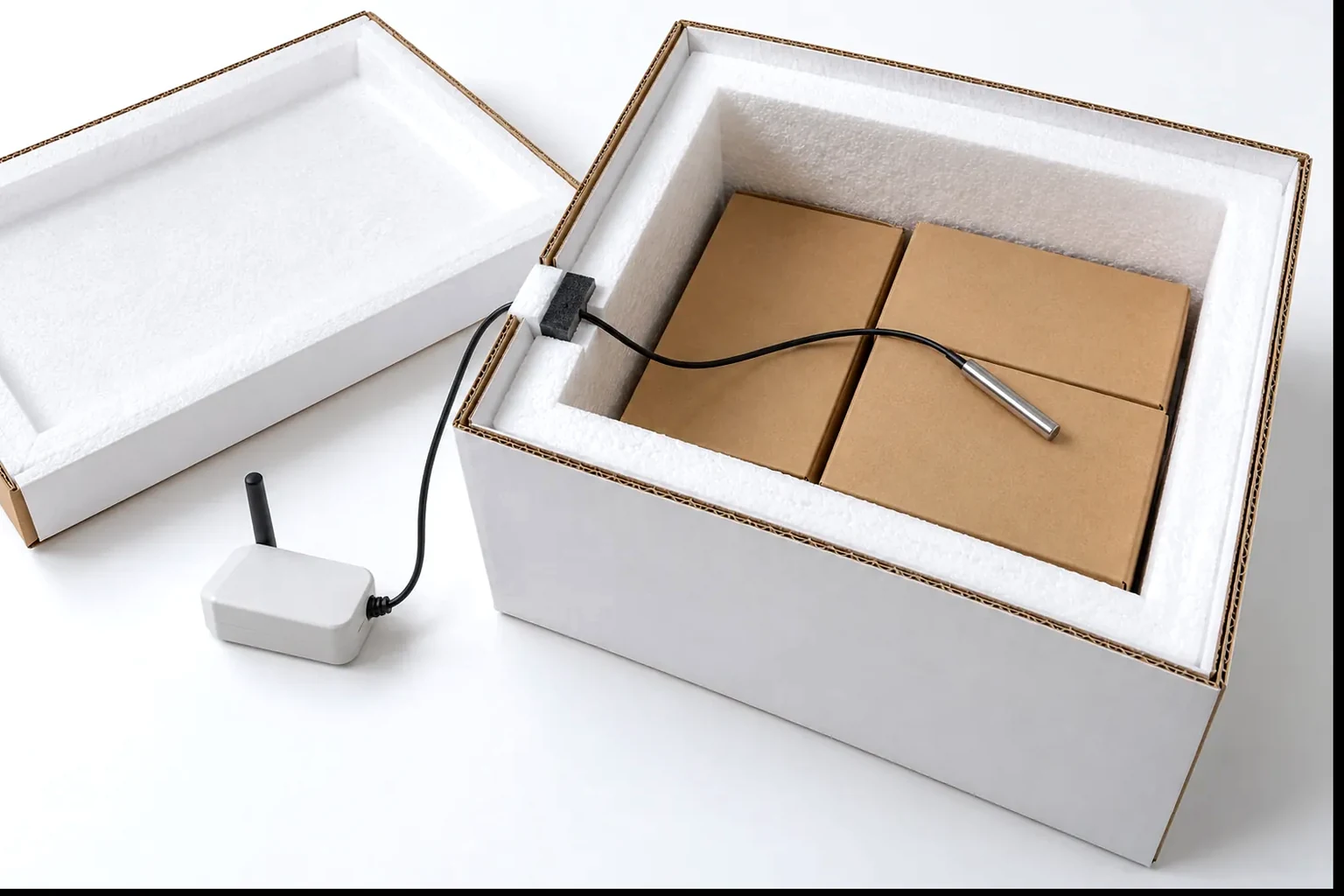
CDC recommends Digital Data Loggers (DDLs) with a detachable probe buffered with glycol, glass beads, sand, or Teflon, an out-of-range alarm, low-battery indicator, current/minimum/maximum display, recommended uncertainty of ±0.5°C (±1°F), and a logging interval programmed to record at least every 30 minutes. A buffered temperature probe prevents false excursions by protecting the thermometer from sudden temperature changes when a refrigerator door is opened, immersing the probe in liquid (glycol, ethanol, glycerin), loose media (sand, glass beads), or a solid block (Teflon, aluminum). CDC states that calibration testing of temperature monitoring devices should be performed every 2 to 3 years or according to the manufacturer’s recommended schedule, and any TMD not accurate within ±0.5°C (±1°F) must be replaced. In off-site or portable vaccine storage units, VFC providers must review and document temperature data every hour using a DDL with a digital display and a probe in buffered material, and remove no more than 1 multidose vial or 10 doses at a time. The Sensitech TempTale Ultra Probe monitor measures temperatures from -30°C to +70°C with a 1.5-meter detachable probe, ±0.5°C accuracy from -10°C to +45°C (±1.0°C from -30°C to -10°C and +45°C to +70°C), and 16,000 data points (16K) storage capacity. Single-use monitoring devices should be supplied with a manufacturer’s calibration certificate covering the entire temperature range of use (and cannot be recalibrated), while multiple-use devices should be calibrated against a certified, traceable reference standard once a year unless otherwise justified.
Temperature excursion quarantine and handover evidence
Any temperature reading outside the recommended range in the manufacturer’s package insert or EUA factsheet is a temperature excursion; manufacturers analyze the magnitude and total out-of-range time to determine vaccine viability. During a temperature excursion, staff must label exposed vaccines ‘DO NOT USE—TEMPERATURE EXCURSION’, move them to proper storage conditions in a separate container apart from other vaccines, and not discard them before manufacturer or public health authority evaluation.
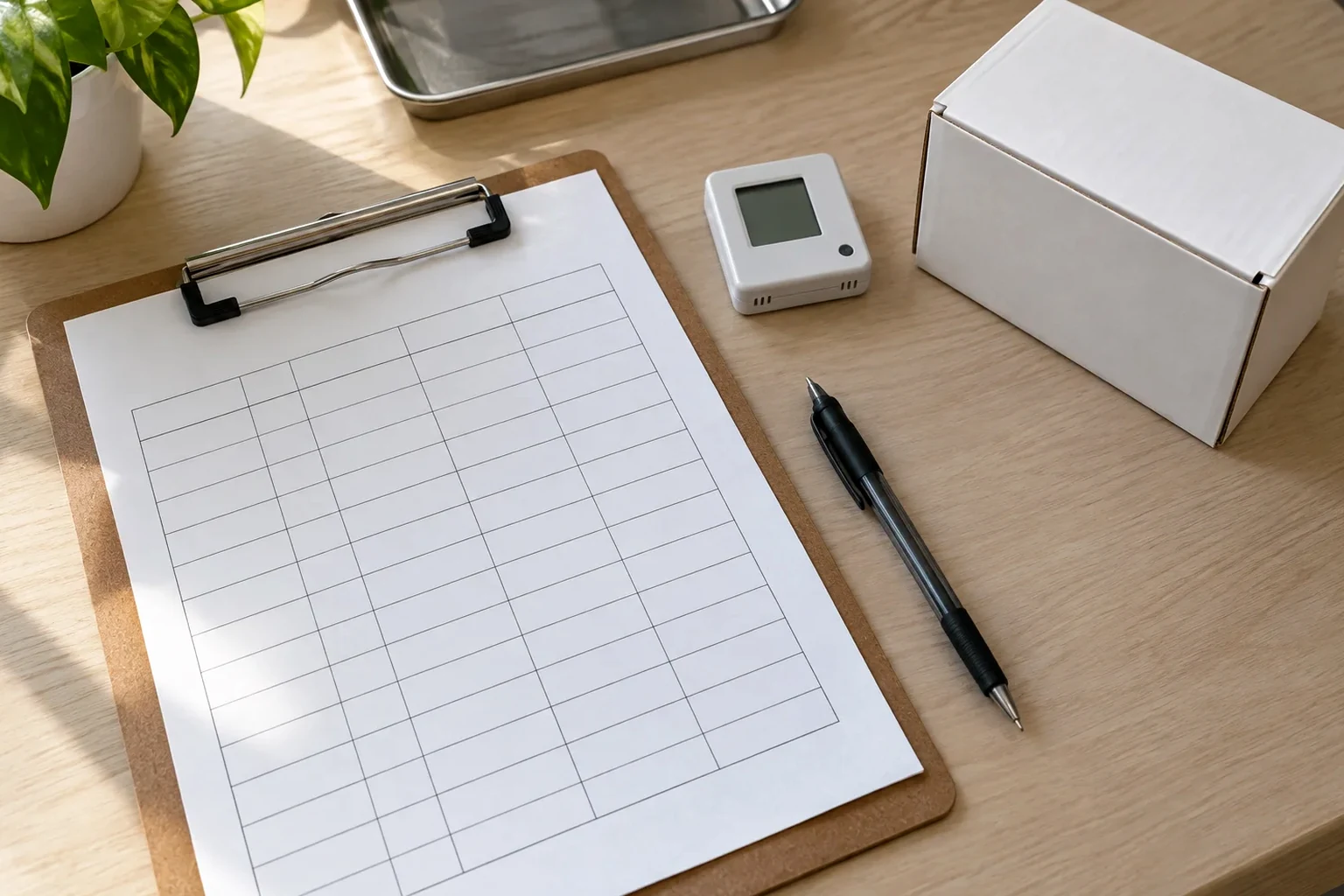
CDC’s excursion documentation record requires date and time of the excursion, storage unit and room temperature (including min/max temperatures during the event), reporter name, length of time affected (if using a DDL), inventory of affected vaccines with lot numbers and funding source (VFC or private), other items in the unit (water bottles/cooler packs), prior unit problems, action taken, and final disposition. CDC specifies keeping vaccine storage temperature logs for 3 years. Immunize.org specifies keeping vaccine storage temperature logs for 3 years unless state or local jurisdictions require a longer retention period. In most instances, downloaded transport time and temperature data should be retained for at least 3 years in a non-volatile, retrievable format, and go/no-go indicator data should be recorded on the product arrival report to accept or quarantine the consignment. Pass the original downloaded file into shipment temperature chart review so clock, sampling interval and gap checks stay with the same evidence pack.
Vaccine temperature band, freeze-buffer and excursion evidence checklist
Use this checklist at storage setup, packout and arrival review. Fill each row from the product insert and the records named above; leave a cell blank when the file in front of you does not supply it.
Table: scroll horizontally if needed to see every column.
| Check | What to confirm |
|---|---|
| Storage or transit band | Product insert or EUA range matched to the unit band in use |
| Unit readiness | Preference tier, clearance, room conditions, consecutive in-range days after install or repair |
| Freeze isolation | Conditioned coolant, barrier or spacer layers, no original frozen gel packs, no dry ice for standard frozen vaccines |
| Monitors | VVM status, electronic freeze indicator when required, buffered DDL probe and programmed interval |
| Excursion response | Excursion label applied, segregated storage, manufacturer or program contact before discard |
| Evidence pack | Date and time, unit and room min/max, out-of-range duration from DDL, lots and doses, indicator status, retention copy |
Questions that delay excursion decisions
Can a VVM clear a freeze event?
No. A VVM records cumulative heat exposure and does not record freezing temperatures. Pair freeze-sensitive loads that travel with conditioned ice-packs with an electronic freeze indicator, and keep the DDL time series for duration outside range.
Who decides whether a lot remains usable after an excursion?
Manufacturers analyze the magnitude and total out-of-range time to determine vaccine viability. Quarantine first, preserve the downloaded curve and arrival indicators, then request that disposition from the manufacturer or public health authority.
Where does coolant conditioning end and packout equipment selection begin?
Conditioning and freeze-isolation checks on this page stop at the release state of the coolant and the barrier around the vials. Shipper model selection, EU GDP container-selection inputs and packout-station equipment stay in the pharmaceutical packout guide. Brick nucleation and staging physics stay in PCM conditioning checks.
Sources
- U.S. Centers for Disease Control and Prevention — Vaccine Storage and Handling Toolkit.
- World Health Organization — How to monitor temperatures in the vaccine supply chain.
- World Health Organization — PQS performance specification for vaccine carriers with freeze-prevention technology.
- World Health Organization — PQS temperature monitoring devices catalogue covering VVM categories, 30 DTRs and electronic freeze indicators.
- World Health Organization — Temperature and humidity monitoring systems for transport operations.
- World Health Organization — Effective Vaccine Management temperature mapping expectation for cold and freezer rooms.
- European Commission — Guidelines on Good Distribution Practice of medicinal products for human use.
- UNICEF — Vaccine carriers and cold boxes procurement guideline.
- PATH — Empirical evaluation of WHO ice-pack conditioning procedure.
- Immunize.org — Vaccinating Adults: Vaccine Storage and Handling.
- Immunize.org — Temperature Log for Refrigerator (p3037f).
- Peli BioThermal — Crēdo Cube User Guide (TIC conditioning).
- Sensitech — TempTale Ultra Probe product data.
Related guides
Pharmaceutical Shipping Packout: What Buyers Must Define Before Equipment Selection
Build packout requirements from product documentation, lane assessment and quality input before you shortlist equipment. Owners, interfaces and records.
Read guide
Reviewing a Shipment Temperature Chart: Data, Handoffs and Missing Evidence
Check one shipment temperature chart for identity, clock, sampling, handovers and gaps. Leave unknown cells blank and pass the original file to quality.
Read guide
Phase Change Material Conditioning: Freezer Setpoints, Supercooling Delta and Brick Checks
Check PCM freezer settings, nucleation, staging and brick readiness before packout, with product-specific instruction examples and a release checklist.
Read guide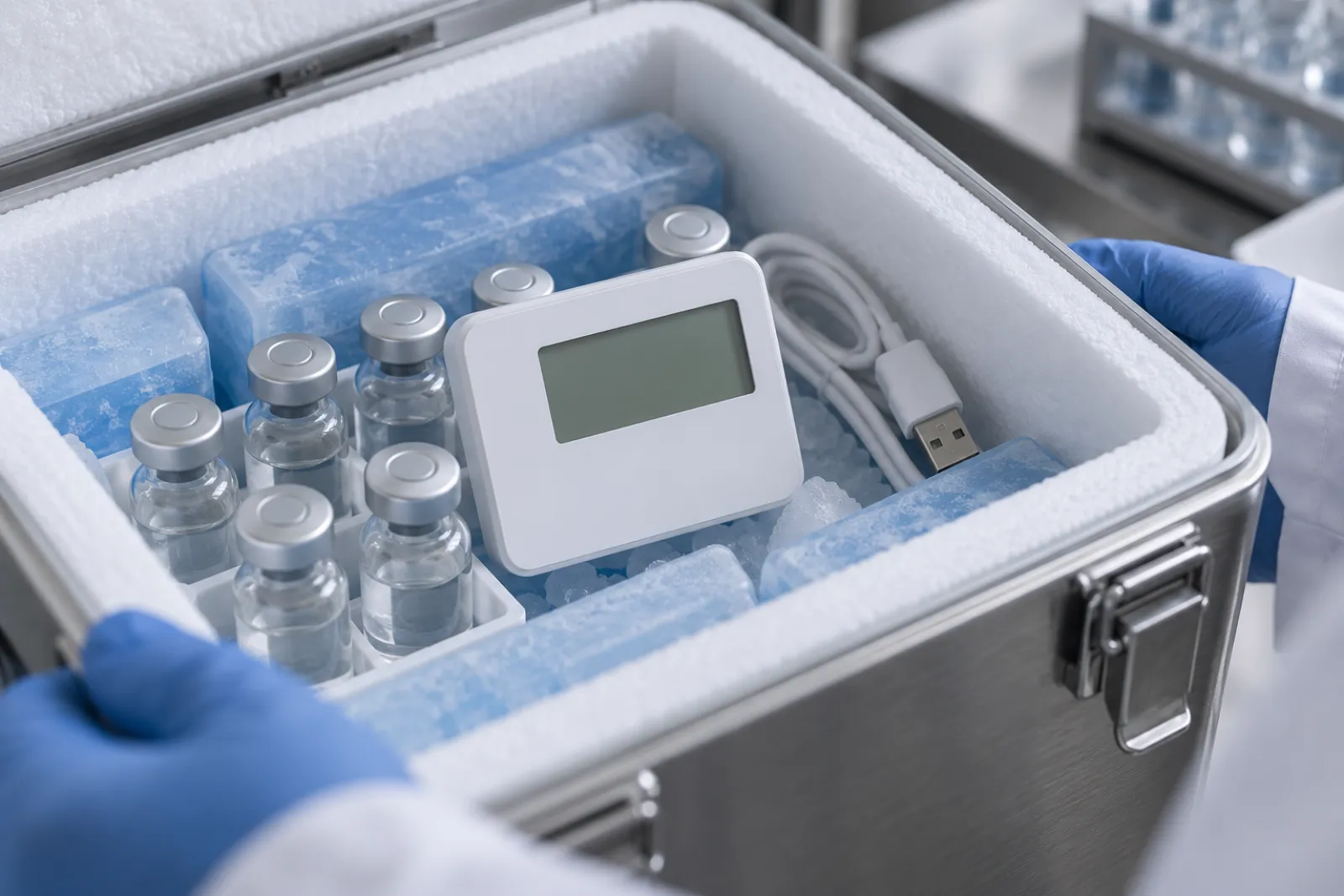
How to Specify a Cold Chain Temperature Data Logger
A specification checklist for a cold chain temperature data logger: range, accuracy, logging interval, export method and calibration documents to request.
Read guide