
Cold Chain Shipping: Ambient, Temperature-Controlled and CRT
Decode cold chain shipping, ambient and CRT terms with source-specific temperature definitions and a checklist for clarifying transport service boundaries.
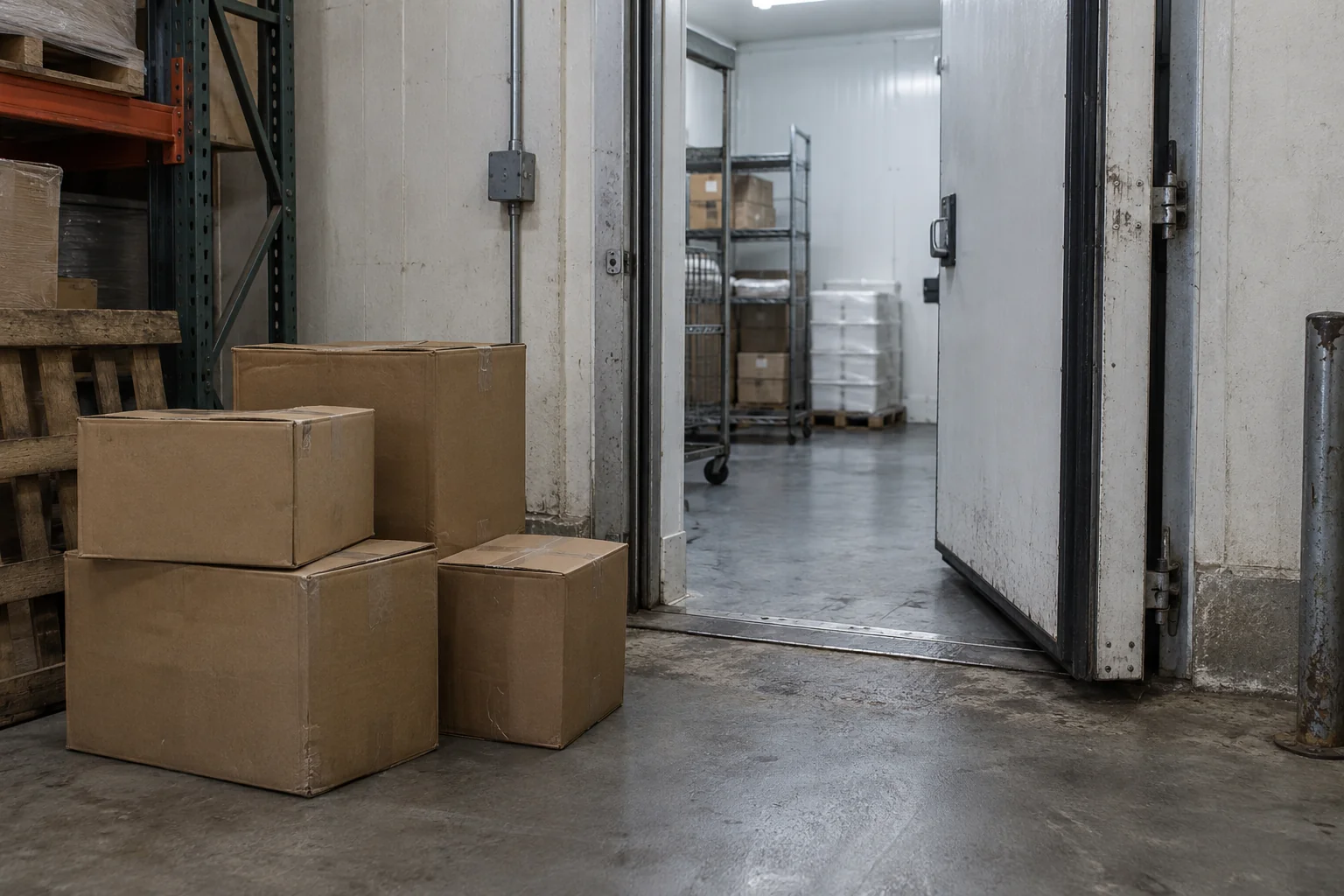
A vague shipping temperature description risks product damage when the booked service covers different conditions. Cold chain shipping means protecting temperature-sensitive goods across storage, handling and transport; specify the required conditions and the coverage of each service rather than relying on the name alone.
Cold shipping, temperature-controlled shipping, ambient shipping and controlled room temperature shipping describe different aspects of a shipment. A service name does not establish the temperature at the product. Start with the product’s documented requirements, identify the space or package being controlled, then ask how the transport and handoffs will be covered. This guide explains the terms and supplies a record for that conversation; it does not select a temperature for any particular food, medicine or specimen.
For the wider process, start with the applications guides. The distinctions to keep in view are:
- Cold chain describes a connected protection task, rather than one vehicle or one box.
- Temperature-controlled calls for a defined control objective; the word does not specify a numerical band.
- Ambient describes surroundings. Clarify what it means in the proposed service.
- CRT has a pharmacopoeial definition and is different from an unspecified ambient service.
What does each shipping term tell you?
Separate the process, the environment and the control claim before comparing services. The table below is a reading aid: WHO’s pharmaceutical guidance provides the system context, while the USP reference supplies the ambient/CRT distinction. It is not a set of interchangeable booking categories.
Table: scroll horizontally if needed to see every column.
| Term | What it describes here | Question still to resolve |
|---|---|---|
| Cold chain shipping | Connected protection of temperature-sensitive cargo through handling and transport | Which handoffs and waiting periods are covered? |
| Cold shipping | Informal wording that needs an explicit shipment specification | What condition is intended for these contents? |
| Temperature-controlled shipping | A stated temperature objective and means of maintaining it | Which compartment, package or product location is controlled? |
| Ambient shipping | A service description referring to surrounding conditions, unless more is agreed | What limits and interventions, if any, are included in the contract? |
| Controlled room temperature / CRT | A defined thermostatic condition in the cited USP reference | Which applicable definition and product instructions govern the shipment? |
| Climate-controlled | Wording to unpack into stated environmental controls | Does the scope include temperature, humidity or both, and over which stages? |
Do not select packaging from the vocabulary alone. The packaging section explains the protection system; the monitoring section explains how conditions are recorded. Those tasks need separate specifications even when one provider supplies both.
Takeaway: Ask what a term commits the provider to do, where, and with what evidence.
Which temperature bands are actually defined?
The following numbers belong to one identified US pharmacopoeial reference, not to cold chain shipping as a whole. They summarize the temperature definitions in USP’s January 29, 2021 reference compilation of chapter <659>, pages 7–8, with December 1, 2020 revision markings. That compilation explicitly is not the current official text.
Table: scroll horizontally if needed to see every column.
| Reference term | Definition in that USP reference, °C | Scope of the number |
|---|---|---|
| Freezer | −25 to −10 | Defined storage place; not every frozen product’s requirement |
| Refrigerator | 2 to 8 | Defined cold storage place |
| Cool | 8 to 15 | Defined temperature term |
| Controlled room temperature | 20 to 25, maintained thermostatically | Normal CRT condition; separate excursion provisions also apply |
| Room / ambient temperature | Temperature prevailing in the working environment | No fixed numerical band in this definition |
Source: USP <659> reference compilation, pages 7–8. These are terminology examples, not instructions to store or ship a specific product within one of these rows. Use the current applicable text and the product documentation for that decision.
Keep food requirements separate: the chilled and frozen food guide addresses that workflow. For medicines, use the pharmaceutical packout guide to connect product instructions with packaging and transport planning.
Common mistake: Copying the refrigerator row into every shipment marked “cold.” A term in a reference table does not identify the requirement of the contents.
Takeaway: Carry the source, version and product instruction alongside any numerical temperature band.
Ambient versus climate-controlled: what should you ask?
Ambient tells you about the surroundings; a control claim needs documented limits and a defined area. WHO’s 2011 glossary defines temperature-controlled environments in terms of active or passive control within predefined limits, distinct from the surroundings. EU GDP chapter 9 addresses product conditions during transport, including transfers and intermediate storage. Neither gives “climate-controlled shipping” a universal numerical band.

When a quote says ambient or climate-controlled, use the same follow-up questions. This is an editorial checklist, not a standard definition of either service:
Table: scroll horizontally if needed to see every column.
| Item to clarify | Useful wording for the request |
|---|---|
| Controlled variable | State whether the arrangement controls temperature, humidity or both. |
| Physical boundary | Identify the room, vehicle compartment, container or package covered. |
| Exposed stages | Describe collection, loading, transfer, waiting and delivery conditions. |
| Control evidence | Provide the agreed limits and how operation within them is demonstrated. |
| Exceptions | Identify who receives a deviation report and who authorizes the next action. |
If a proposal covers the warehouse but says nothing about the loading area, ask for that missing stage before treating it as an end-to-end arrangement. Use warehouse dispatch checks to record that handoff, and mapping versus monitoring to distinguish evidence about a space from a consignment’s history.
Takeaway: Replace “ambient” or “climate-controlled” with an explicit account of the conditions and stages covered.
Does CRT shipping require refrigeration?
CRT names a condition, not a prescribed piece of shipping equipment. Choose the protective arrangement from the product requirements and the route. WHO’s guidance describes both active and passive systems; selecting between them is a separate task from decoding the temperature term.
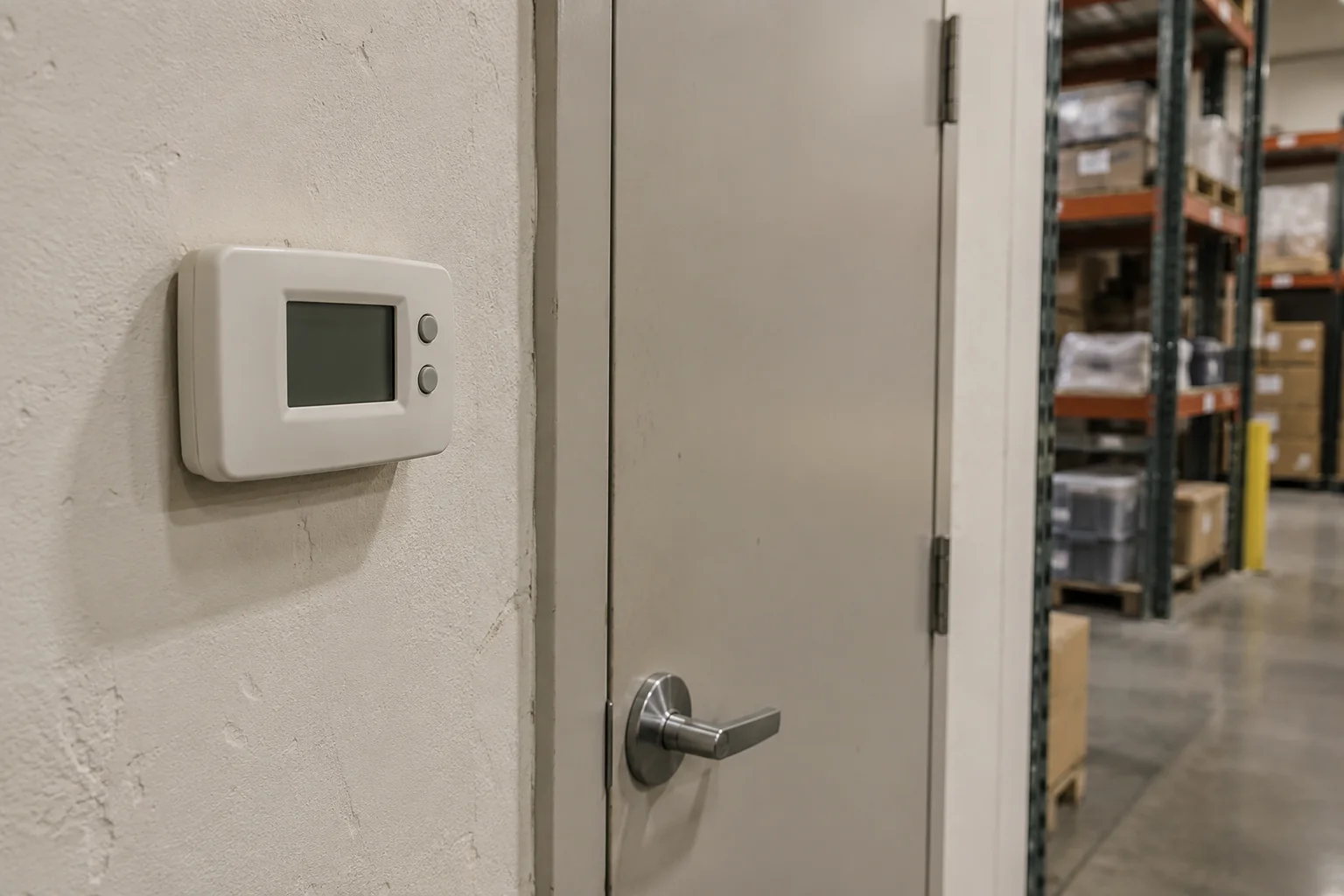
“Keep it colder” is an inadequate specification. Check for both upper and lower product limits before selecting a system. Avoid prescribing a coolant, refrigerated vehicle or ordinary parcel service simply because the shipment is described as room-temperature cargo.
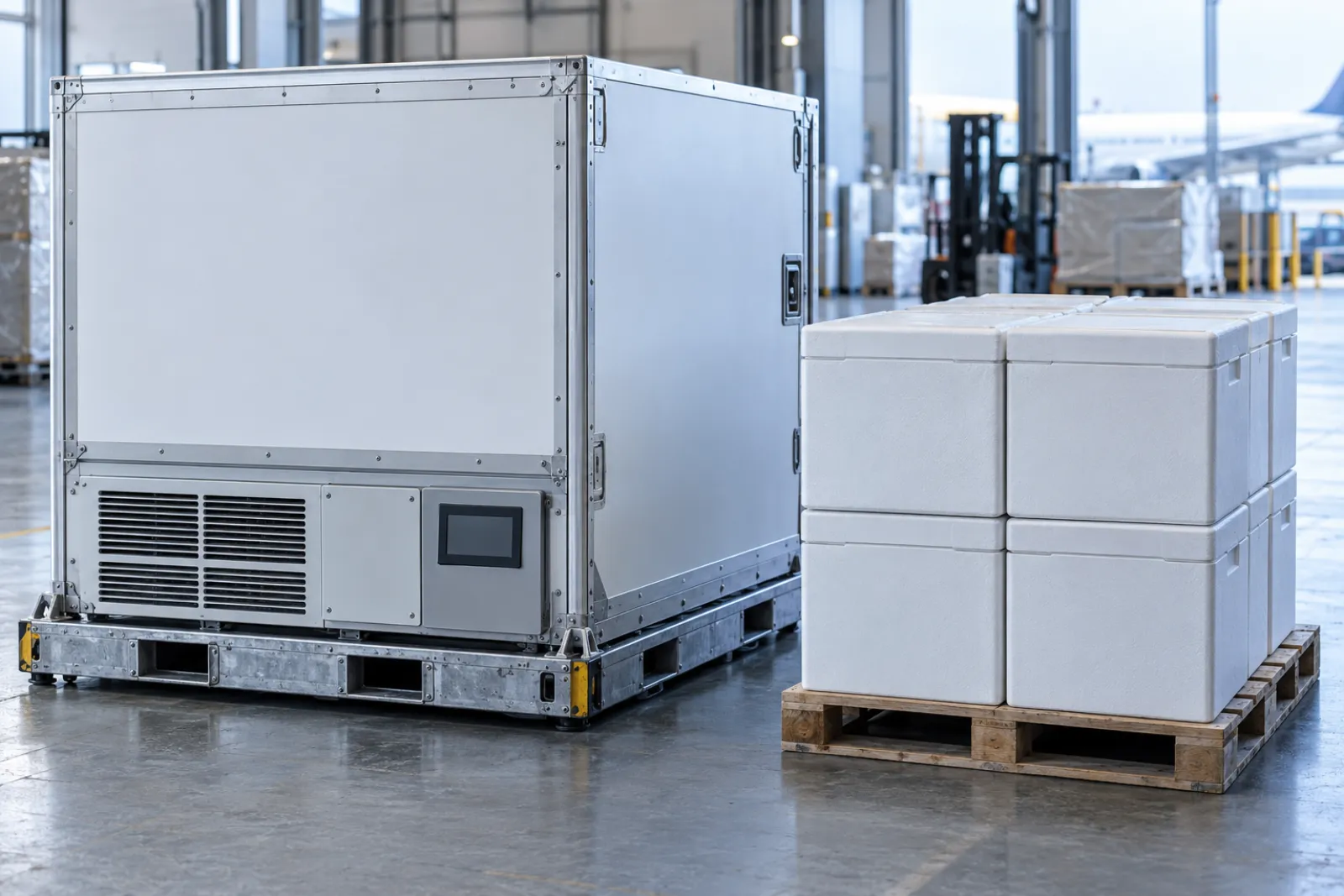
The active versus passive comparison explains the system boundary. When assessing a box, use the insulated shipper selection inputs and the qualification report review to check whether the documented conditions match your intended use.
The CRT reference also contains excursion provisions involving mean kinetic temperature, or MKT. These are separate from its normal control band. This guide does not apply those provisions to a shipment or authorize release after an excursion.
Takeaway: Specify the required condition first; assess the equipment and packaging against it afterwards.
Where does a cold chain begin and end?
Define the boundary for the journey you are planning, including the transitions between providers. For medicines, EU GDP chapter 9 emphasizes transport conditions and intermediate storage; WHO’s container guidance considers departure through arrival in the recipient’s controlled store. A delivery scan alone is not the same record as a temperature history.
Use this blank planning table to expose gaps between the separate service descriptions:
Table: scroll horizontally if needed to see every column.
| Stage | Boundary to write down | Record or agreement to identify |
|---|---|---|
| Storage to packing | Where custody and protective conditions change | Product instruction and packing procedure |
| Packing to collection | Where the closed package waits | Staging arrangement and collection responsibility |
| Collection to transit | What the carrier accepts | Booked service and handling scope |
| Transfer or delay | What happens outside the main transport compartment | Intermediate storage and contingency arrangements |
| Arrival to receiving storage | When the consignee takes responsibility | Receiving procedure and storage destination |
| Data to decision | Who reviews the temperature history | Record location and authorized exception reviewer |
For air cargo, IATA’s public acceptance explanation identifies packaging, routing, environmental conditions and availability of temperature control through the journey among the items to resolve. It does not make every service described as cold shipping equivalent.
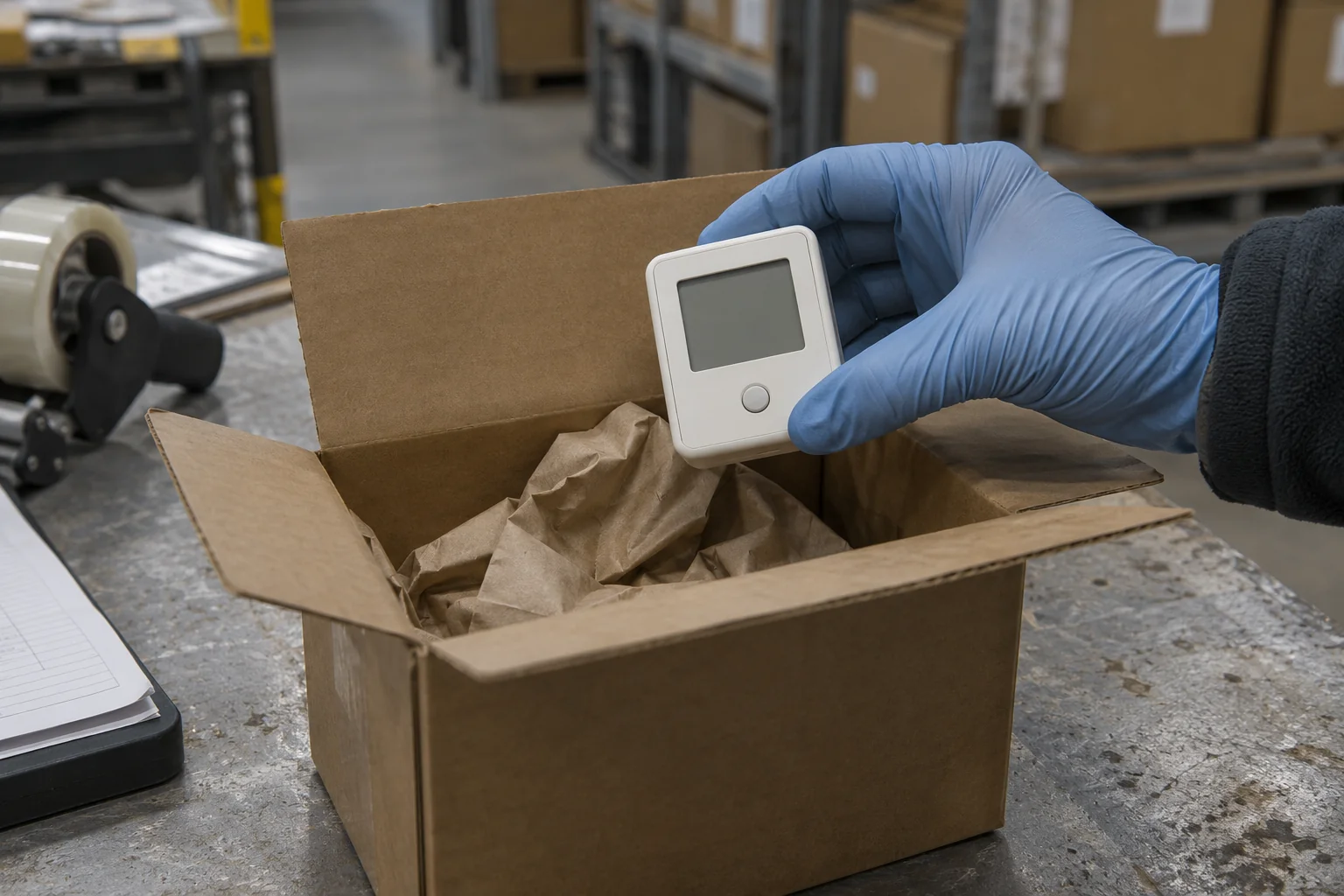
Use data logger selection to define the record you need. A logger records conditions; it does not replace the protective system or the receiving decision.
Common mistake: Defining the chain as the time inside the truck while leaving collection waits and arrival storage unspecified.
Takeaway: Put every change of custody and protective environment into the journey record.
What should replace a vague service description?
Use a short written specification with references to the underlying documents. The blank record below is an editorial aid for clarifying a proposal. It is not an approved shipping instruction, and its fields do not create temperature limits or obligations by themselves.
Table: scroll horizontally if needed to see every column.
| Field | Your shipment entry |
|---|---|
| Product and instruction reference | ___ |
| Required conditions and units | ___ |
| Meaning of the quoted service term | ___ |
| Space or package covered | ___ |
| Stages outside that coverage | ___ |
| Packaging configuration reference | ___ |
| Temperature record and review owner | ___ |
| Exception contact and authorized decision route | ___ |
| Receiving arrangement | ___ |
Before accepting a description:
- Identify the document that supplies the product conditions.
- Distinguish a reference definition from a product requirement.
- Ask the provider to explain the exact scope of each service word.
- Resolve the uncovered stages in the journey table.
- Agree how records and exceptions reach the receiving team.
For carrier acceptance questions, continue with the parcel-carrier cold-shipping checklist. That page covers service and preparation questions; this one provides the vocabulary needed to ask them clearly.
Takeaway: A completed scope record is more useful than a service label with an assumed temperature range.
When this does not apply
This terminology guide cannot determine a product’s storage instructions or whether exposed goods remain suitable for use. Its pharmaceutical references have specific scopes; their definitions should not be carried over automatically to food, specimens or another jurisdiction.
- Current compliance requires the applicable official text, rather than the historical USP reference compilation used for explanation here.
- Special product conditions take their direction from the relevant product documents.
- A generic temperature table does not approve an excursion or a change of storage condition.
- Photographic illustrations show concepts, not qualified equipment, measured conditions or an actual shipment.
Takeaway: Use the glossary to clarify the question, then use the product and service documents to settle the requirement.
Frequently asked questions
What does “ambient delivery” mean?
Ambient delivery usually means the goods travel in the surrounding conditions of the vehicle and facilities, without a stated temperature band. Ask the provider to restate that commitment in writing, with the covered journey stages and any excluded handling. An ambient service does not establish CRT coverage.
What are standard ambient conditions?
There is no single standard ambient range for shipping. In the USP reference used above, room or ambient temperature is the temperature prevailing in the working environment, with no fixed numerical band. If a quote cites a standard, ask for its name, version and what it measures.
Are warehouses temperature-controlled?
Confirm it for the particular facility and area. Ask for its operating limits, control boundary and relevant evidence, including what happens during loading and temporary storage. The existence of indoor racks or cooling equipment does not establish coverage for your consignment.
How to mail temperature sensitive items?
First establish the product conditions and carrier acceptance for the complete contents. Then assess the protective packaging, journey and receiving arrangements. The parcel-carrier checklist linked above supplies the document questions; a general shipping term cannot approve a packout.
What is cold chain packaging?
It is the protective packaging arrangement used within the temperature-sensitive shipment process. It is one part of the chain. Choose it against documented contents, route and handling conditions; do not treat the existence of an insulated box as evidence about the whole journey.
What is the purpose of a cold chain?
Its purpose is to protect temperature-sensitive goods across the connected process. At receipt, a useful evidence handoff links the shipment identity to its temperature record, retains that record and sends it to the named reviewer. Refer exceptions to authorized personnel under the existing procedure; these suggested steps do not supply acceptance criteria.
Method and scope
This guide organizes public pharmaceutical and air-cargo references into a glossary and planning questions. Numerical examples come from the identified USP reference compilation, not from shipment tests. The tables with blank fields are editorial aids. Check the current applicable text, product documentation and written service scope before using a term as an operational requirement.
Related guides: warehouse dispatch helps assign handoff records; active versus passive packaging explains system choices; pharmaceutical packout connects medicine-specific instructions with shipment planning.
Prepared by Cold Chain Practice Editorial Desk.
Related guides

Temperature-Sensitive Dispatch: A Warehouse Handover Checklist
A cold chain dispatch checklist covering pick checks, logger start, documents, carrier handover, data responsibility and exception escalation fields.
Read guide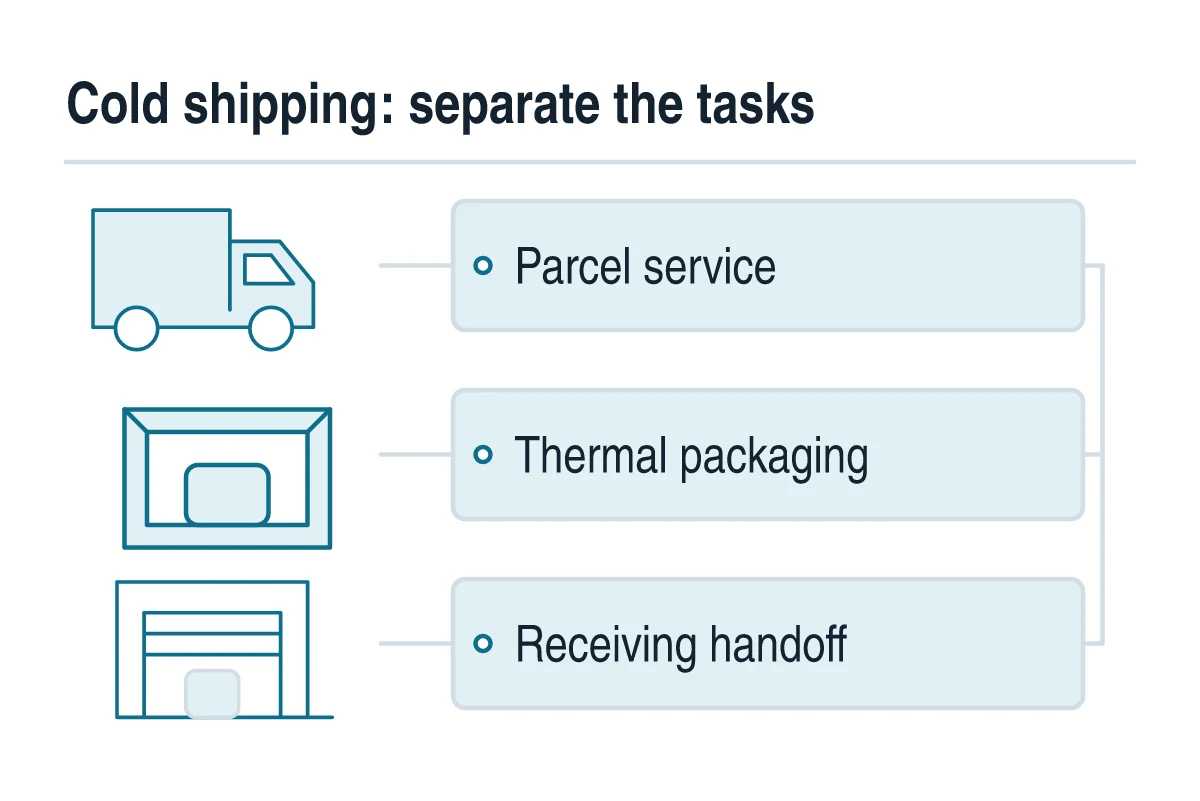
Cold Shipping Checks: FedEx, UPS, DHL and USPS
Separate parcel service from thermal packaging, check each carrier's official dry-ice rules, and record who owns preparation, transit and receipt.
Read guide Active vs Passive Cold Chain Packaging: A Buyer's Comparison
Compare active and passive cold chain packaging by system boundary, route constraints and operating conditions, without a universal winner.
Read guide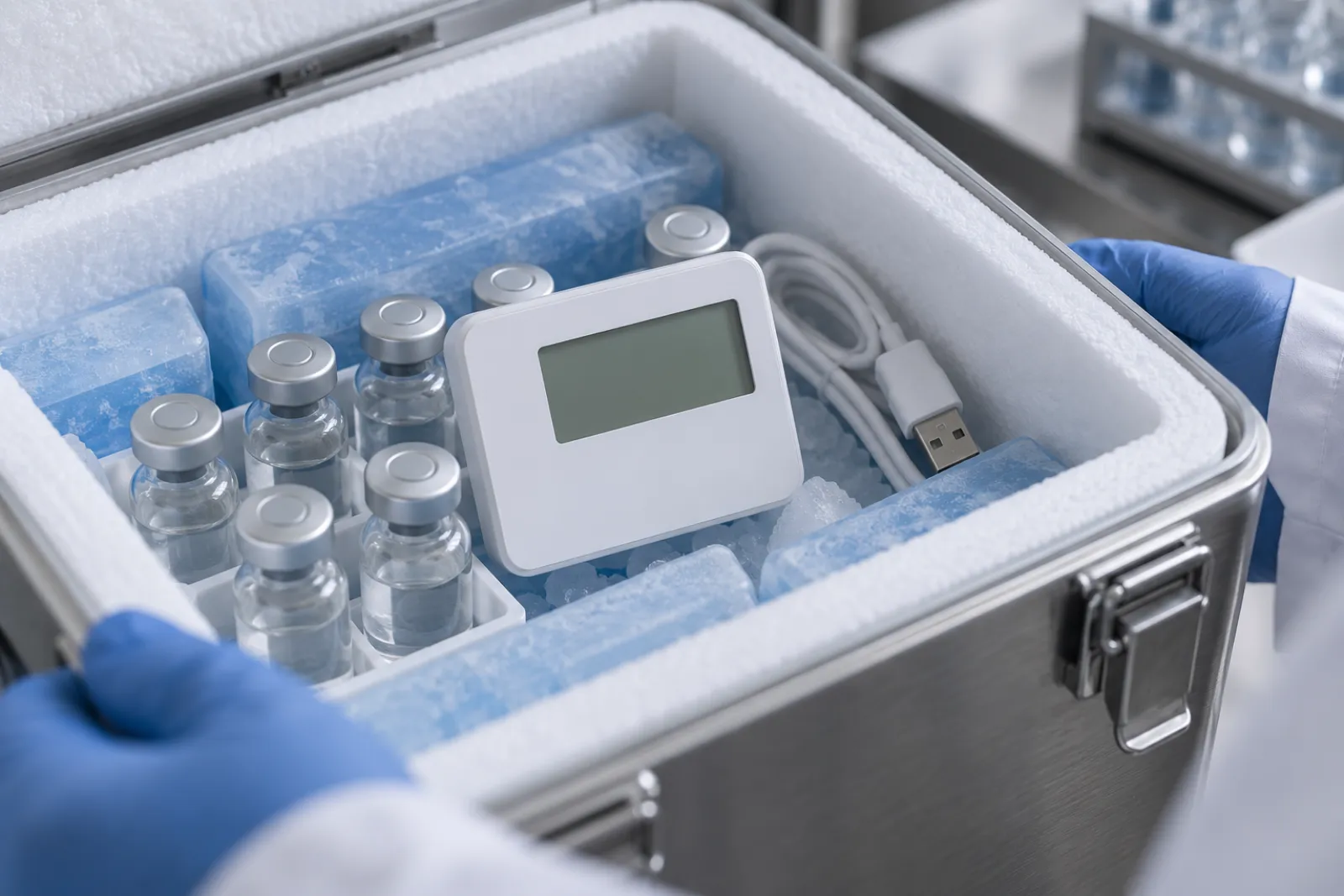
How to Specify a Cold Chain Temperature Data Logger
A specification checklist for a cold chain temperature data logger: range, accuracy, logging interval, export method and calibration documents to request.
Read guide