
Cold Chain Packaging Problems: A Packout Failure Investigation Worksheet
After a damaged shipper or a temperature excursion, copy the packout, preconditioning, seal and handover records and hand that file to quality.
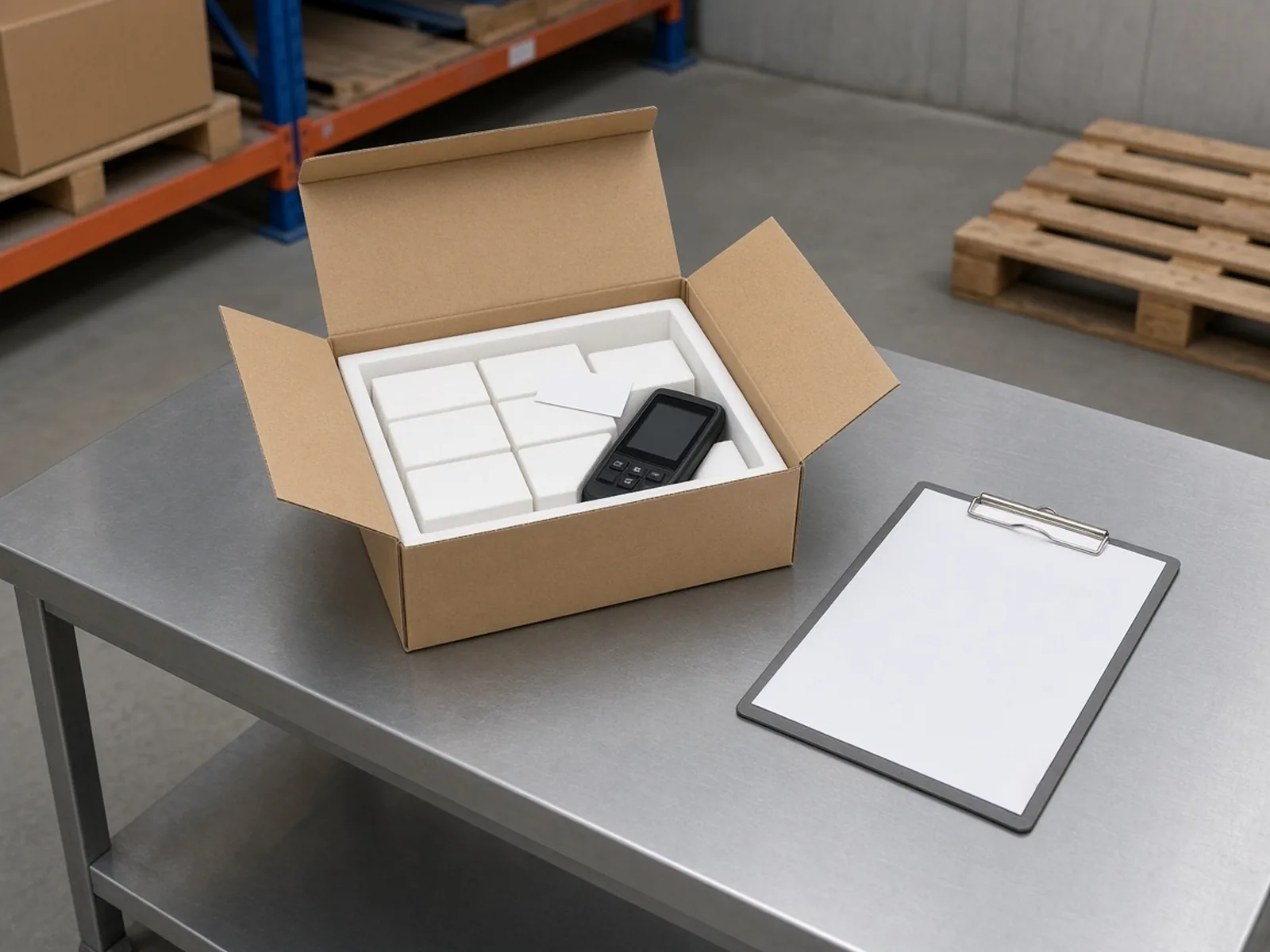
A damaged insulated shipper, or a temperature device that has already alarmed, is a cold chain packaging problem with the cause still open. Copy the packout configuration, the refrigerant preconditioning record, the seal, and the handover record, and give that set to quality. This worksheet covers one incident. It sits in the packaging section.
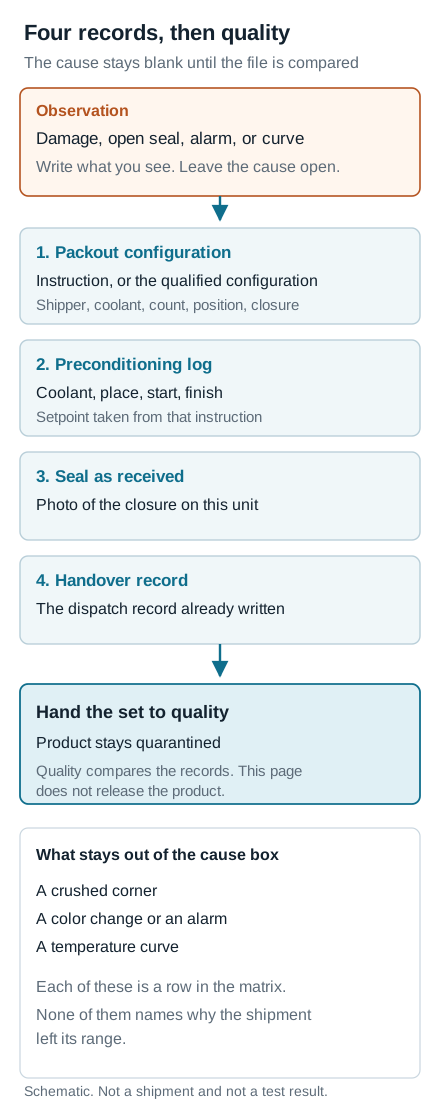
Cold chain packaging problems and solutions start, at receiving, with four records: the packout configuration, the refrigerant preconditioning log, the seal, and the handover record. Write damage, a color change, or a temperature curve as an observation and leave the cause blank. Peli BioThermal’s public FAQ defines conditioning as chilling or freezing coolant to the correct temperature for that shipper. The temperature is the one in the shipper’s own instruction. For pharmaceutical consignments, the WHO May 2015 monitoring supplement says a go/no-go result goes on the product arrival report, which receiving uses to accept the goods into active storage or to quarantine them until an investigation and a final disposition. The same file is what you build for temperature controlled packaging problems and solutions when a damaged shipper or an excursion is all you know so far.
Copy these into the record your site already uses:
- One row per observation, with the hypothesis still to check, the original evidence, the responsible party, and the next step.
- A comparison of the packout configuration, the preconditioning record, and the version of the unit that came back.
- The arrival-report line and the device file that sit with those tables.
- The name of the quality person who receives the set, and the original documents that stay attached.
The tables on this page are the copyable record. There is no separate file to download.
Copy the four records before you name a cause
Receiving can see a crushed corner, a broken seal, a warm coolant brick, or a device that has changed color or drawn a curve. Those observations go in the matrix. The cause stays unassigned until quality sets them next to the packout configuration, the preconditioning log, the seal, and the handover record.
The packout configuration is the instruction that names the shipper, the coolant, the count, the positions, and the closure for this shipment. Where a qualification report defines that configuration, attach the configuration the report tested. Reading a thermal packaging qualification report is the guide for the test object, the payload, the profile, and the stated limits. This worksheet only asks you to attach that configuration.
The preconditioning record is the log from the site that chilled or froze the coolant. Peli BioThermal’s FAQ describes conditioning as chilling or freezing coolant to the correct temperature for use in the shipper, and it says that supplier’s TIC and BRIC coolants are conditioned in a freezer or a refrigerator depending on the phase-change point of the selected PCM. Your log should name the coolant, the place, the start and finish, and the setpoint the instruction required. How to choose a refrigerant, and what a conditioning requirement has to contain before you buy, is covered in comparing gel packs and other PCM refrigerants. For this incident, copy the requirement that already applies and what the log says was done.
The seal record is the closure on the unit now. The handover record is the dispatch record already written. Attach both. Dispatch procedure itself stays on the warehouse handover checklist your site already uses.
Fill one row for each observation
Copy the table. Add a row when you have another observation. Where a document is missing, write “missing” in the evidence cell so the gap is visible. The hypothesis column holds the question that is still open.
Table: scroll horizontally if needed to see every column.
| Observation | Hypothesis still to check | Original evidence | Responsible party | Next step |
|---|---|---|---|---|
| Outer shipper crushed, wet, torn, or open | Handling, the closure, or a component change may explain the damage. The visible mark alone does not settle which. | Photos of the unit as received, the identity label, and the packout instruction | Receiving records the observation. Quality compares it with the instruction. | Quarantine the product. Pass this row to quality with the photos attached. |
| Coolant type, count, or position differs from the instruction | The shipment may have left on a different configuration, or the unit in hand may be a later version. | Packout instruction, packing record, and the coolant now in the shipper | The packing site holds the packout record. Quality compares the two. | Leave the coolant as found. Keep the quantity the instruction already states. |
| Preconditioning log missing, or the recorded hold differs from the instruction | The coolant may not have been brought to the state that instruction requires. | Conditioning log (coolant, place, start, finish, setpoint from the instruction) and the coolant state on arrival | The site that conditioned the coolant holds the log. Quality compares it with the instruction. | Keep the setpoint on the instruction. This page does not supply a replacement temperature. |
| Seal torn, missing, or replaced | The shipper may have been opened after packing, or the closure may differ from the qualified closure. | Photo of the seal and the handover record that should show the seal at dispatch | Receiving records the seal. The dispatch party holds the handover record. | Attach both records. Leave the cause blank. |
| Indicator color change, alarm, or a temperature curve outside the product’s stated range | The product may have been exposed. The reading does not identify packout, preconditioning, the seal, or the handover as the source. | Arrival report entry, and either the indicator or the downloaded time-temperature file, with the device identity | Receiving writes the arrival report. Quality owns quarantine and disposition. | Keep the original device file. The curve stays an observation. |
| Returned unit’s components differ from the qualified list, or a single-use shipper shows an earlier trip | This physical unit may differ from the version that was packed and qualified. | Component or refurbishment note, if one exists, and the qualified configuration | Whoever holds the service or packing record. Quality compares the versions. | Write the version down. Return, cleaning, and rotation of the fleet are a separate job. |
Copy the packout configuration, the preconditioning record, and the returned unit into the comparison table before quality assigns a cause.
Compare the instruction, the log, and the unit in hand
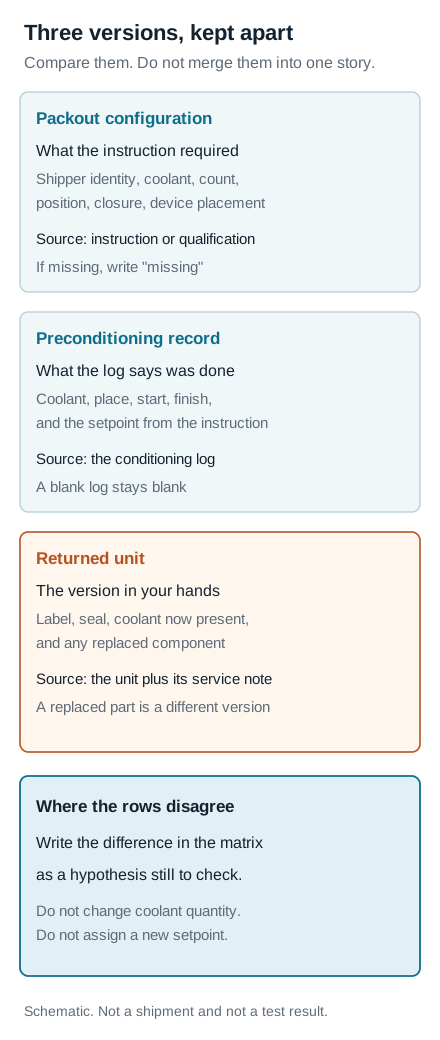
Peli BioThermal’s FAQ describes refurbishment for a Crēdo Cube, Crēdo Go, Crēdo Xtreme, Crēdo Vault, or Crēdo Cargo that has been through a Peli BioThermal service center. The described work is cleaning, visual inspection, and checking of key components such as TICs and VIPs, including replacement when required. Peli states that this is carried out to the manufacturer’s specifications and global standard operating procedures, with the aim that the product can be reused in as-good-as-new condition. A replaced TIC or VIP means the unit in your hands can differ from the unit named in an older qualification. Write both identities in the table. Fleet returns, cleaning, and rotation are covered in reusable thermal shipper operations. This page only records the version that came back on this incident.
The same FAQ says Peli’s single-use products are qualified for one-time use under ISTA7D testing profiles. If a single-use shipper shows a previous trip, record that against the qualification scope for that product. Record that profile name beside the qualification for the product. Any temperature the dock uses still comes from the shipper instruction.
Peli also says durations on its website and sales material are simplified or rounded, and that the thermal report or qualification data for a specific product states the exact conditions, probe locations, and scenarios tested. Compare the returned unit with that report. A rounded hour figure on a product page is the wrong baseline for this incident.
Table: scroll horizontally if needed to see every column.
| Item | Packout configuration | Preconditioning record | Returned unit |
|---|---|---|---|
| Shipper identity | Name and configuration in the instruction or qualification | Only if the log names the shipper. Otherwise write “not in this log”. | Label on the unit, plus any refurbishment or replacement mark |
| Coolant | Type, count, and position the instruction names | Coolant identity the log says was conditioned | Type, count, and position in the unit now |
| Conditioning state | State the instruction requires. The correct temperature is that instruction’s temperature. | Place, start, finish, and the setpoint that was used | Frozen, chilled, warm, leaking, or missing. Observation only. |
| Closure | Seal or closure the instruction specifies | Usually absent from a conditioning log. Write “not in this log” when it is absent. | Seal present, broken, or replaced |
| Components | TICs, VIPs, panels, or other parts the qualified configuration names | Component identity only if the log records it | Parts present, including any part a refurbishment note says was replaced |
| Monitoring device | Type and placement the packout names | Write “not in this log” when the conditioning record is silent | Device present or absent, its identity, and whether the certificate is with the file |
Where a cell has no document, write “missing”. Leave the count and the temperature unfilled rather than guessing a value that makes the row look complete.
Put the temperature record on the arrival report
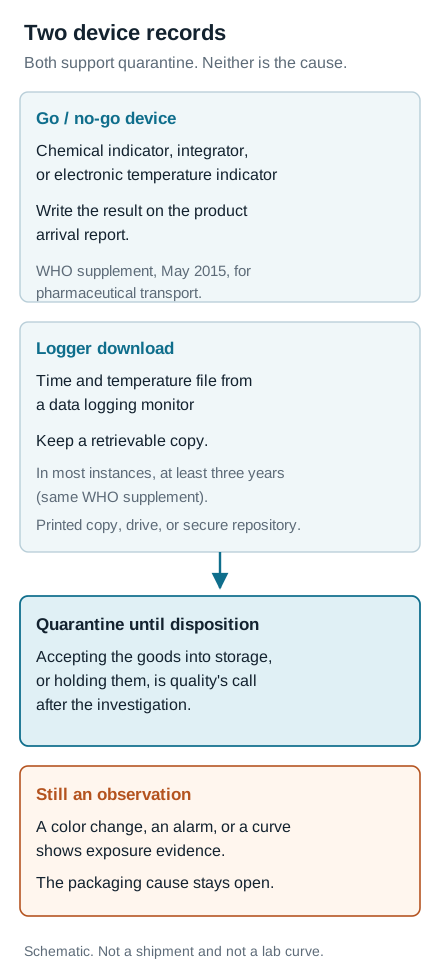
The May 2015 WHO supplement on temperature and humidity monitoring for transport is a supplement to Technical Report Series No. 961, Annex 9, and it is also paginated as Technical Report Series No. 992, Annex 5. It is written for time- and temperature-sensitive pharmaceutical products. Section 2.2.2 says go/no-go data from chemical indicators, chemical time-temperature integrators, and electronic temperature indicators should be recorded on the appropriate product arrival report. The receiving store uses that entry to accept the consignment into active storage or to quarantine it until an investigation has taken place and a final disposition has been made.
The same section says downloaded time and temperature data, from devices such as electronic data logging monitors, should in most instances be retained for at least three years. The copy has to be non-volatile and retrievable: a printed hard copy, or an electronic medium such as a hard drive, tape, flash drive, or DVD. Storage in a secure web-based repository may also be acceptable. Keep the file the device produced. If a download exists, that file is the record you attach. The three-year figure is a retention period for the data, under the conditions in that section. It is not a transit-time limit for the shipper.
Section 2.2 says the device, depending on the user requirement, may be the check used to accept or reject a shipment, or a later tool for finding weakness in the transport system. The supplement’s stated reason for having the device is to judge whether product quality may have been compromised by exposure to harmful or unwanted conditions. Exposure is the question the device can speak to. Packout, preconditioning, the seal, and the handover are the questions the other records speak to. A color change, an alarm, and a curve each stay in the observation column.
On the file, note the device class and whether its calibration certificate is attached. The supplement says a single-use device should be supplied with the manufacturer’s calibration certificate covering the whole range the device is designed to be used over, and that these devices cannot be recalibrated. A multiple-use device should be calibrated against a certified, traceable reference standard once a year, unless otherwise justified. A missing certificate is a gap in the file. What the certificate ought to contain is covered in what a temperature sensor calibration certificate should tell you. The gap explains a missing document. It does not, by itself, explain the temperature the product saw. Faults in a monitoring network are outside this incident file.
Hand the completed tables to quality
Copy the matrix and the comparison table into the record your quality unit already uses. Attach the original documents, and name the person who receives them:
- The packout instruction, or the configuration section of the qualification report.
- The preconditioning log.
- The seal photos and the handover record.
- The product arrival report, and the indicator or the logger file.
- For a returned reusable unit, the note that identifies this physical unit and any component the refurbishment record says was replaced.
Quality owns the comparison and the disposition. Receiving’s job ends when the observations and those original documents are in that person’s hands. The product stays quarantined until quality decides. This worksheet has no release step.
How these tables were compiled
The matrix and the comparison table are blank structures for documents you already hold. They are not a shipment investigated by this site, and the diagrams are schematics of the same handoff. Statements about conditioning, refurbishment, single-use qualification, and rounded website durations come from Peli BioThermal’s public FAQ, archived on 11 October 2026 and re-read on 12 October 2026. Statements about the arrival report, the three-year retention of downloaded data, and calibration certificates come from the WHO supplement dated May 2015, sections 2.2 and 2.2.2. That supplement is pharmaceutical distribution guidance. Other products follow the rules your quality unit names. No price, packaging-machine model, or measured lane result is used. The time figures taken from the sources are the retention period for downloaded data and the yearly calibration interval for multiple-use devices unless otherwise justified. Neither figure is a preconditioning temperature or a coolant quantity.
Related guides

Comparing Water-Based Gel Packs and Other PCM Refrigerants
Compare cold chain refrigerants by formulation, phase-change range, conditioning and encapsulation instead of relying on a simple gel versus PCM label.
Read guide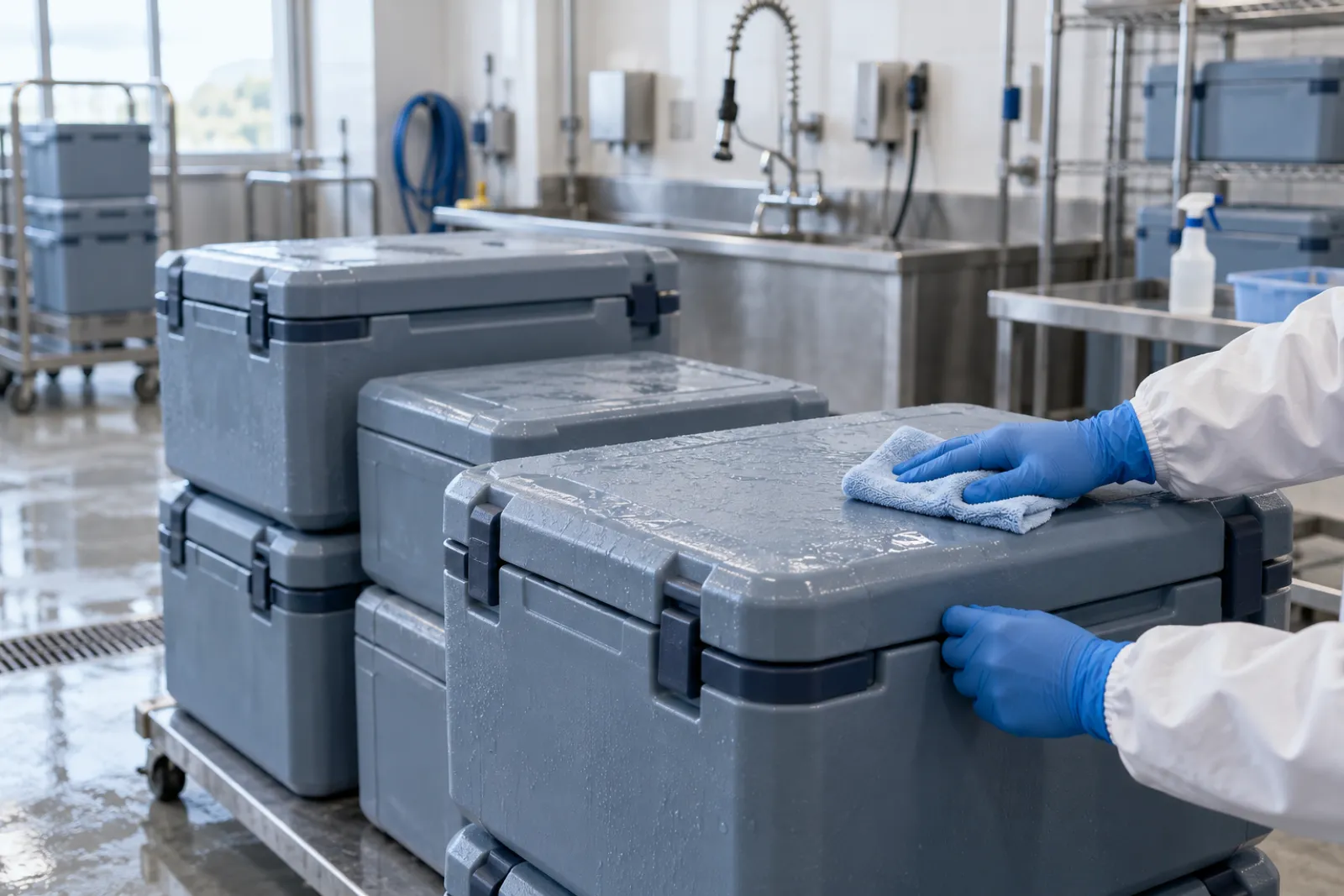
Reusable Thermal Shippers: Return Logistics, Cleaning and Rotation
Compare return flows, cleaning responsibility, rotation, losses and total cost when you run reusable thermal shippers, with a checklist for operations teams.
Read guide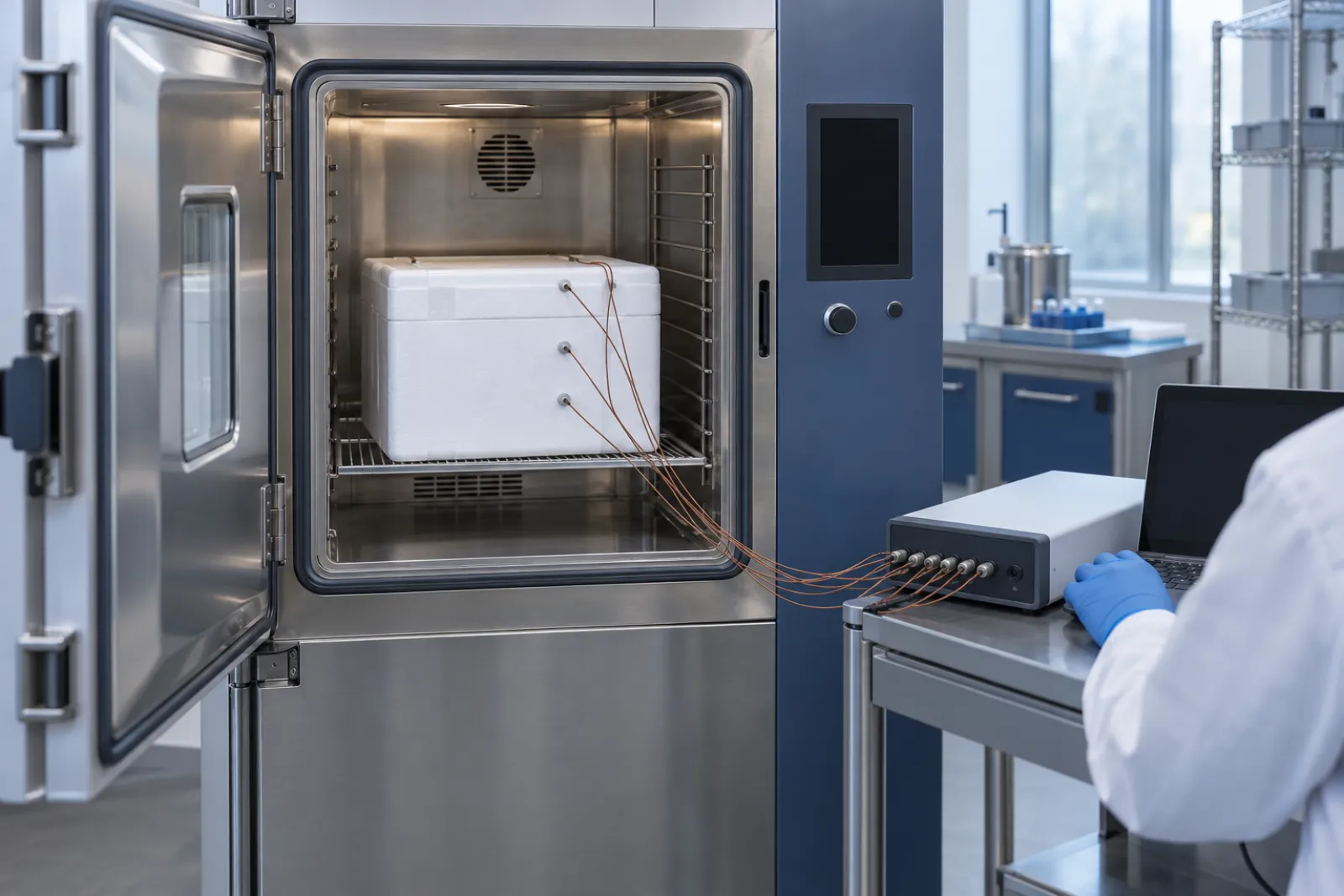
Thermal Packaging Qualification Reports: Reading Conditions and Limitations
How to read a thermal packaging qualification report: check the test object, payload, temperature profile, duration, acceptance criteria and stated limits.
Read guide
Active vs Passive Cold Chain Packaging: A Buyer's Comparison
Compare active and passive cold chain packaging by system boundary, route constraints and operating conditions, without a universal winner.
Read guide