
Shipping Lane Qualification: Build a Route Evidence Plan
Prepare a shipping lane qualification study with a route-node matrix, protocol inputs, logger retrieval records and a change-review checklist.
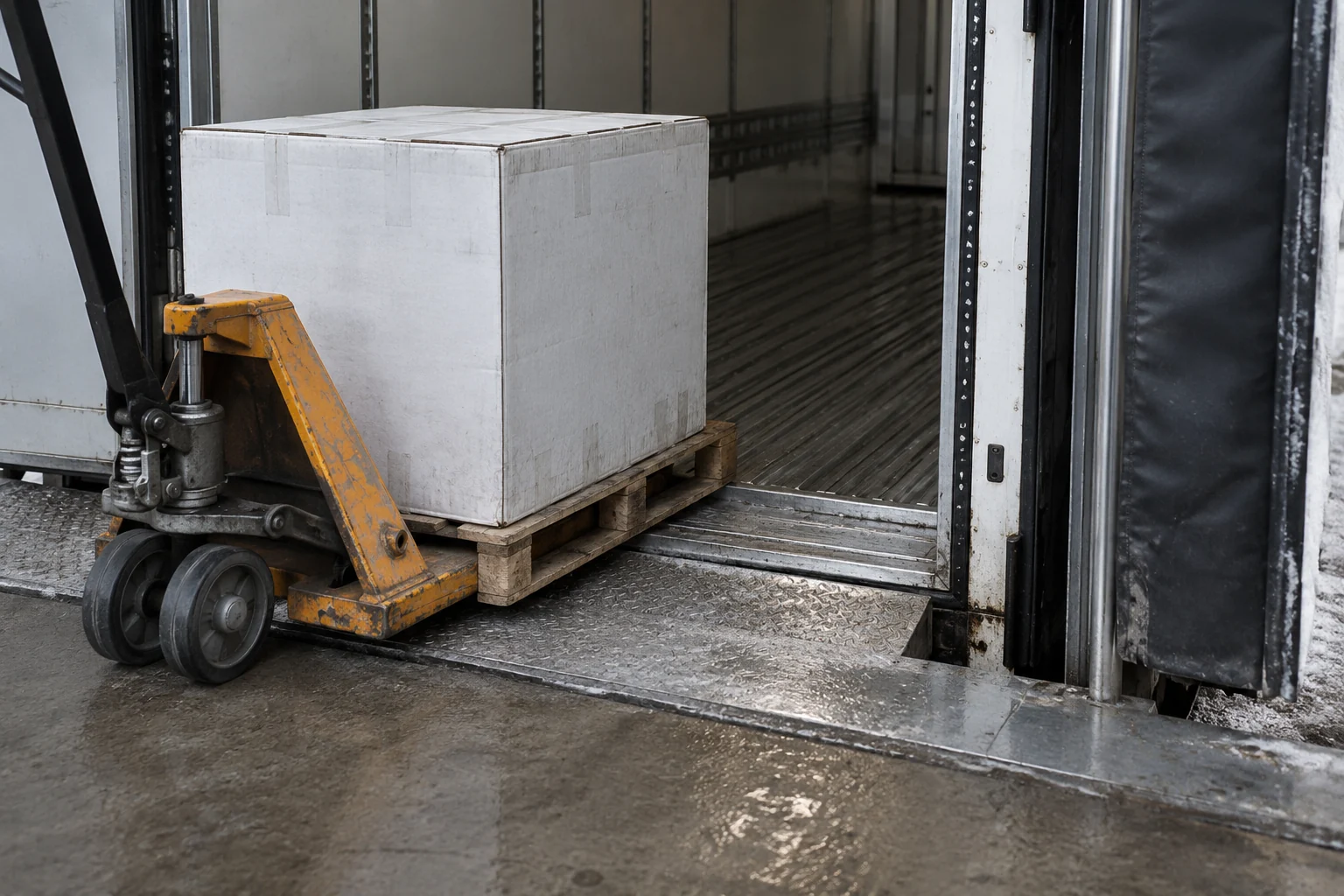
Start with the route evidence, before choosing test conditions
An undocumented handover can leave a shipping study unable to explain where exposure occurred. Start shipping lane qualification by defining the actual route, its handling events and the evidence each participant will return.
This guide helps pharmaceutical logistics and quality teams prepare inputs for transport route profiling before qualification testing. Copy the route matrix, protocol record and change checklist below into your project files. They are editorial planning worksheets: project values remain blank until you have records to support them.
Table: scroll horizontally if needed to see every column.
| Input | Source to obtain | Decision it supports |
|---|---|---|
| Origin, destination and service | Distribution plan and carrier itinerary | Which lane is being studied |
| Handover and storage events | Site procedures and carrier event records | Where evidence needs an owner |
| Season and operating variants | Shipment history and proposed schedule | What the study needs to represent |
| Ambient temperature records | Identified route-study logger files | Environmental profile for later testing |
| Product requirements | Approved product documentation | Separate product-specific acceptance decisions |
| Evidence handover | Named receiving and analysis contacts | How the study becomes a reviewable record |
WHO’s route-profiling method collects representative ambient exposure data to inform shipping-system qualification. Its protocol covers route, transport mode, seasonal coverage, sampling and study responsibilities. The WHO documents describe a method; they do not establish US regulatory compliance for your project. WHO Supplement 14, introduction and section 2.2.
Build a route-node and responsibility matrix
Use one row for each meaningful movement, waiting period or transfer in the proposed itinerary. The rows below are prompts, not a claim that every lane contains these stages. Delete irrelevant rows and split any stage that has more than one custodian or storage arrangement.
Copyable route record
Record the lane ID, record revision, study manager and date above this table. In each file cell, enter the actual filename or record reference. An empty cell means evidence is still needed.
Table: scroll horizontally if needed to see every column.
| Route node or segment | Custodian / event recorder | Season / operating variant | Waiting or storage arrangement | Entry / exit event source | Temperature / raw-file reference |
|---|---|---|---|---|---|
| Origin: removal from controlled storage and packing | |||||
| Origin: dispatch staging and collection | |||||
| First transport leg | |||||
| Transfer hub, terminal or customs hold, if applicable | |||||
| Intermediate storage or onward carrier transfer | |||||
| Final delivery leg | |||||
| Receipt and transfer into destination storage |
Add the planned and observed entry/exit times to your event log, with the time zone or UTC offset. Keep the itinerary’s expected duration separate from the duration observed during a study shipment. For a handover with no timestamp source, assign someone to resolve that gap before scheduling the study.
For this worksheet, ask each custodian to identify who records the event and who can obtain the underlying record. A tracking portal contact and a receiving-site logger contact may be different people. The warehouse dispatch guide helps turn the origin handover into practical operating checks.
Decide which route variants need their own evidence
Make a short variant list alongside the matrix: carrier and service level, connection or hub, shipment day, season, transport mode and parcel or pallet handling. Ask the study owner to mark each as included, excluded or covered by a documented rationale. Avoid quietly treating two services between the same cities as interchangeable.
If an alternative receiving location is proposed to simplify device return, record the actual address and explain which handling stages it changes. Let the study owner decide whether the substitute is representative before dispatch. A convenient return address should be visible in the study record.
Turn the matrix into protocol decisions
Use this record to prepare the discussion with the study manager and quality team. It is not a complete qualification protocol. Attach the approved protocol reference once those responsible have settled the design.
Table: scroll horizontally if needed to see every column.
| Protocol input | Project decision / document reference | Rationale, owner and unresolved gap |
|---|---|---|
| Study purpose and exact start/end events | ||
| Lane IDs, direction, modes and service levels | ||
| Included seasons and operating variants | ||
| Sampling plan and justification for coverage | ||
| Real or simulated shipments; handling similarity | ||
| Logger type, IDs, configuration and calibration records | ||
| Ambient logger location and attachment method | ||
| Logging interval, recording duration and clock convention | ||
| Event log and node responsibilities | ||
| Retrieval, download and file-transfer arrangements | ||
| Missing data, device failure and deviation handling | ||
| Analysis method, review and approval responsibilities |
Our recommendation is to resolve the sampling rationale explicitly rather than copy a trial count from another project. Ask which variants the plan will cover, which it cannot cover yet, and what evidence would close those gaps. The study manager should justify the chosen design in the project protocol. This worksheet supplies no universal number of trips, seasons or days.
Write down how simulated consignments will follow the intended operational process. Ask the carrier whether the proposed package will travel through the same handling system as the future shipment. Document differences for review instead of assuming that sharing a destination is enough.
Separate ambient measurements from payload measurements
Name the measurement purpose before selecting the logger position. WHO’s ambient route study places the logger outside the shipper or in a ventilated enclosure beside the product, and links device identity with shipment events. An internal payload trace answers a different question. WHO Supplement 14, section 2.3.
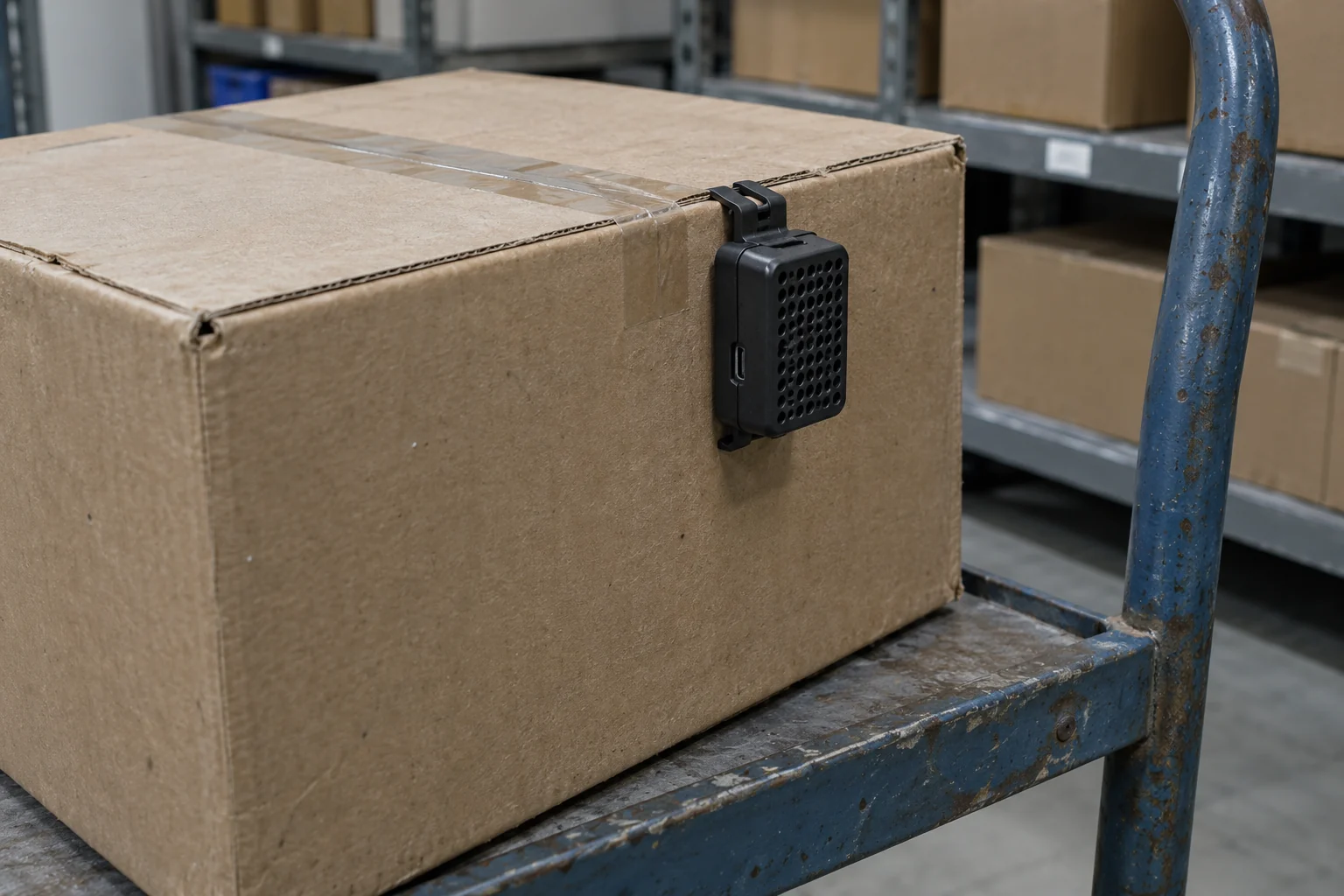
In your record, give every channel a purpose such as “external ambient” or “payload location,” and retain a placement description or photograph. If the project collects both, keep their identities distinct throughout analysis. Ask the reviewer which record supports the route profile and which supports assessment of the packed system.
Use the data logger selection guide to prepare device requirements. Before issuing devices, reconcile the planned recording duration, memory, export format and clock settings with the protocol. Put any unresolved configuration decision back in the protocol record rather than leave it to the packing operator.
Arrange retrieval before the first dispatch
WHO’s retrieval guidance addresses calibration records, return/download arrangements and contingencies for missing or failed devices. WHO Supplement 14, section 2.4.
Use the handover checklist below as an editorial file-management aid. Agree on the recipient and transfer method with each participating site before devices leave the origin.
Table: scroll horizontally if needed to see every column.
| Record to retain | Information to connect | Assigned owner / file reference |
|---|---|---|
| Device register | Logger ID, shipment ID and measurement purpose | |
| Original logger file and usable export | Device ID, timestamps, units and configuration | |
| Event log | Node IDs, entry/exit times and recorders | |
| Carrier records | Tracking ID, service and actual routing | |
| Placement and dispatch record | Attachment position and start event | |
| Calibration evidence | Device identity and applicable certificate | |
| Deviations and missing-data log | Affected files, explanation and review decision |
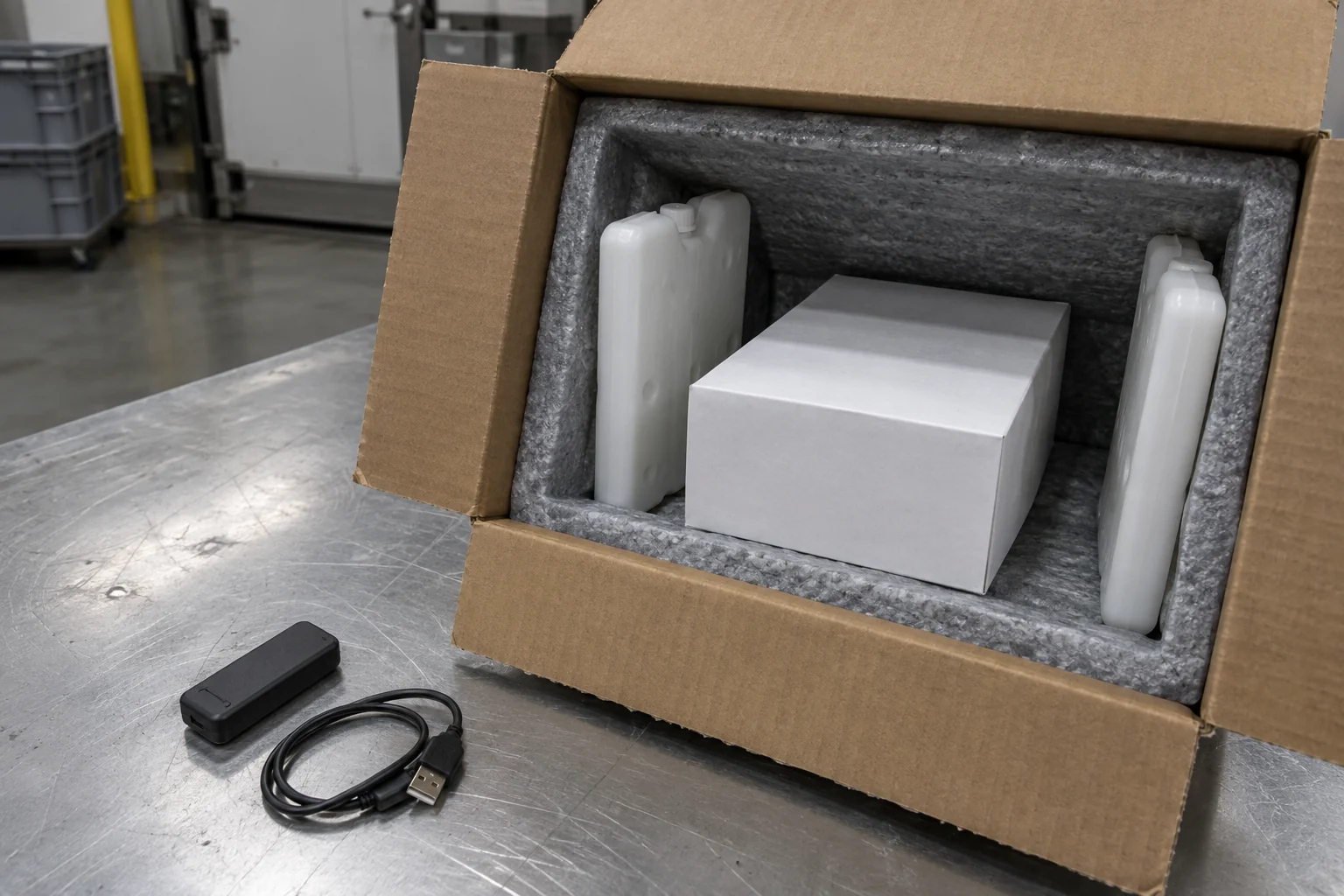
For this workflow, retain the original files and perform any formatting or timestamp normalization in a separate working copy. Make the conversion traceable. If a device is missing, an event cannot be matched, or a recording ends early, log the issue and its scope for review; do not fill the temperature series with invented values.
Hand a defined scope to the qualification team
Prepare a handover note that identifies the route-study version, included variants, missing coverage, linked files and analysis owner. Ask the qualification team to document how those inputs will inform its proposed test conditions. A completed planning worksheet is not a qualification result.
WHO’s shipping-container supplement distinguishes controlled testing and field qualification stages. Stage labels alone do not tell you whether a supplier report covers your route. WHO Supplement 13, sections 2.1.1–2.1.3.
Once a report exists, use the qualification report review guide to compare its configuration, payload, ambient profile, duration and limitations with your project. Keep product acceptance limits and product-release decisions with the responsible quality function and approved product documentation.
Review changes against the recorded lane
Keep this checklist with the lane record. These are suggested review triggers, not automatic instructions to repeat every test. For each change, record the affected scope, evidence reviewed, decision, owner and approval reference.
- Origin, destination, direction or intermediate hub changed.
- Carrier, service level, transport mode or connection changed.
- A new season, dispatch pattern or waiting arrangement is proposed.
- Parcel/pallet format or handling process changed.
- Logger placement, configuration or data-transfer process changed.
- Shipment records reveal an unrepresented delay or exposure pattern.
- A packaging revision needs comparison with the route evidence.
WHO recommends continued monitoring after formal profiling and distinguishes it from the profiling exercise itself. WHO Supplement 14, section 2.
Your next step is to take the blank matrices to the origin, carrier and receiving contacts. Confirm who can return each underlying record, then give the study manager the unresolved gaps alongside the proposed protocol inputs. Leave temperatures, durations and coverage conclusions blank until the relevant evidence has been collected and reviewed.
Prepared by Cold Chain Practice Editorial Desk.
Related guides
Thermal Packaging Qualification Reports: Reading Conditions and Limitations
How to read a thermal packaging qualification report: check the test object, payload, temperature profile, duration, acceptance criteria and stated limits.
Read guide
How to Specify a Cold Chain Temperature Data Logger
A specification checklist for a cold chain temperature data logger: range, accuracy, logging interval, export method and calibration documents to request.
Read guide
Temperature-Sensitive Dispatch: A Warehouse Handover Checklist
A cold chain dispatch checklist covering pick checks, logger start, documents, carrier handover, data responsibility and exception escalation fields.
Read guide
Cold Chain Equipment Procurement: A Practical RFQ Checklist
Turn capacity, environment, interfaces, evidence, service and acceptance needs into a clear RFQ, with a copy-ready field table for packout equipment buyers.
Read guide